
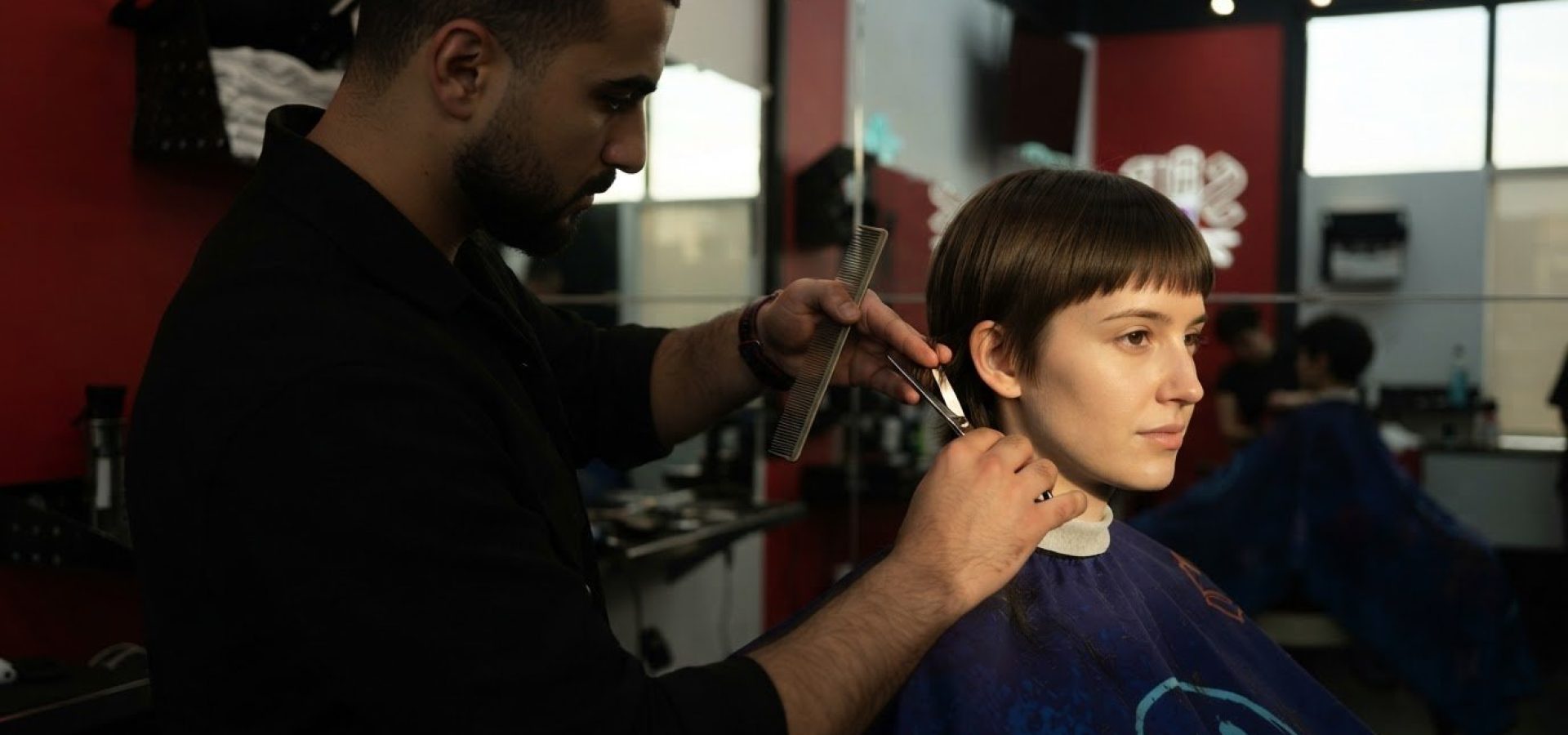
You don’t need a whole new haircut to add texture. Knowing how to ask for a textured haircut starts with describing the finish you want, such as movement at the ends without losing much length or changing the overall shape. Straight hair can suit a textured crop, too, with the right approach for its thickness and how you like to style it.
If you like your current cut, say so. Your barber can discuss adding texture through point cutting or razoring while keeping the existing length and outline largely intact. A reference photo can help show the amount of texture and top length you have in mind.
This guide covers how to describe the top, fringe and fade, what to consider with straight hair, and how your daily styling routine affects the result. You’ll also learn what to say when you want more movement without a major change, so the conversation starts with clear details and leaves room for your barber’s advice.
Key Takeaways
- Use a reference photo to show the top length and texture you like, then describe how you want the sides to look.
- Straight hair can work well with a textured crop; hair thickness and your everyday styling routine help shape the result.
- You can ask for texture in an existing cut without losing much length by explaining what you want to keep.
- Choose between styles such as a textured crop, French crop or Caesar cut based on the fringe and finish you prefer.
- Clear details about your desired length, fade and styling time help your barber shape a cut that feels right for you.
Sharing reference photos and preferred side fades
A clear reference photo gives your barber something specific to discuss. Choose an image that shows the texture and length you want on top, rather than relying on a style name alone. Two cuts called textured crops can look quite different: one may have soft, loose movement, while another has a choppier finish and a more defined fringe.
If possible, bring a photo of hair with a similar thickness and direction to yours. The reference doesn’t need to match your face or overall style. Use it to point out details such as a forward fringe, visible separation between sections, or a top that keeps some length. If one image shows the top you like and another shows the sides, explain which details you’re taking from each.
Be specific about the sides. A fade or taper changes how the top connects to the hair around the temples and back of the head. For a textured crop, you can discuss a skin fade, mid taper or low fade. These names help frame the conversation, but describe the finish you want, too: close and sharp, gradual and understated, or somewhere between.
- Skin fade: Explain how close you want the sides to look near the skin.
- Mid taper: Ask for a more restrained transition around the sides.
- Low fade: Describe a lower transition if you want more hair left higher up.
Don’t assume a photo communicates the exact fade height. Point to where you want the fade to begin, and say whether you want a sharp contrast with the top. If you prefer a subtle outline, bring up a taper rather than naming a skin fade. A reference photo can show the shape, while your words clarify the level of contrast.
Share your routine, too. Tell your barber whether you want a cut that takes two minutes or less to style, and describe what you usually do each morning. Mention whether you prefer a short or medium fringe. Those details help make the reference work for your habits, rather than copying a look without considering your routine.
Before the cut starts, repeat the key choices in plain language: “Keep this much movement on top, leave the fringe medium, and make the sides a low fade.” That short summary gives the barber a chance to clarify the shape. The sides of a textured cut still need fading every 3 to 5 weeks, so the fade choice also affects how often you’ll want to maintain its outline.
Does a textured cut work for straight hair?
Yes. A textured crop can suit straight or wavy hair, with thickness helping guide its shape. To decide how to ask for a textured haircut that suits your hair type and face shape, describe your hair, the finish you want and the fringe you prefer.
Matching the Cut to Hair Thickness
Hair thickness affects how full a cut looks and how much movement shows through the top. Tell your barber whether your hair feels fine, dense or somewhere between, then describe the result you want. If a dense top feels bulky, for example, ask about a lighter finish. If you want a fuller appearance, explain that before discussing how much texture to add.
Considering Hair Type and Face Shape
Hair type and face shape help guide a style and fringe that feel balanced. Straight hair can suit a textured crop, while a French crop offers a cleaner, structured look often suited to round or oval faces. Mention your hair’s natural direction and the outline you prefer. That gives your barber context for discussing how the fringe sits against your forehead.
With straight hair, ask how the crop will work with your natural texture and daily routine. Hair that lies flat can show separation differently from hair that bends naturally. A useful way to explain your goal is, “My hair is straight, and I want movement without a bulky top.” This keeps the conversation focused on how the cut should look on your hair.
Your preferred fringe can help narrow down the style. A French crop has a longer, heavier fringe, while a Caesar cut has a short, uniform fringe close to the hairline. If you want a low-maintenance look or have a receding hairline, mention that when discussing a Caesar-inspired shape. Your barber can consider those preferences alongside your hair’s direction.
To make it easier to decide how to ask for a textured haircut, name one priority and one detail you’re flexible about. For instance, say, “I want to keep the fringe short, but I’m open to changing the top.” You don’t need every style term. Explain what you want the cut to do, then discuss how its shape can suit your hair and face.
Adding texture to an existing haircut
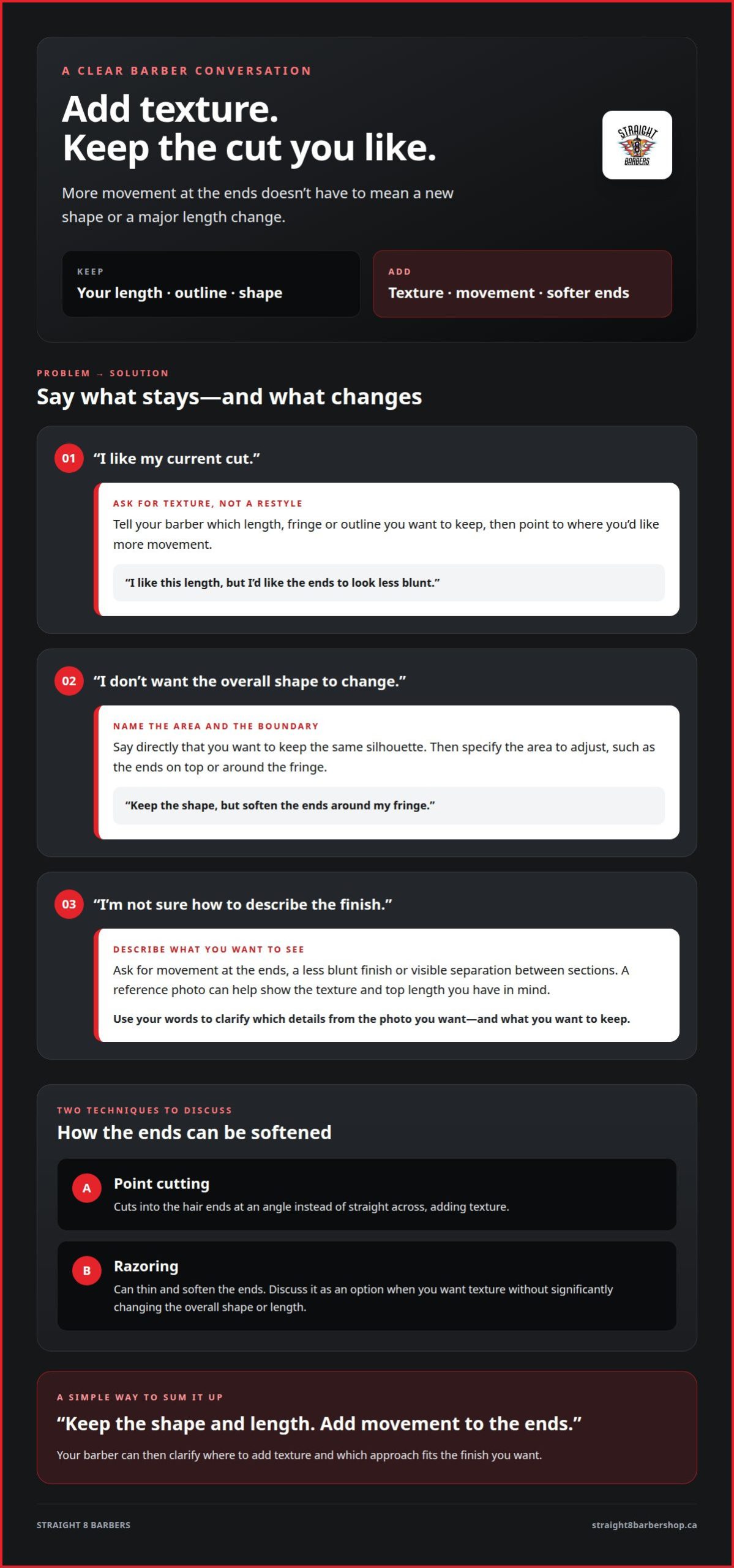
You can ask for more texture without requesting a new shape or a major length change. Tell your barber what you want to keep, such as your current outline, fringe or top length, and where you’d like more movement. For example: “I like this length, but I’d like the ends to look less blunt.”
Point cutting and razoring are two techniques that can add texture. Point cutting means cutting into the hair ends at an angle instead of straight across. Razoring can thin and soften the ends. You can discuss either method when you want texture added to an existing cut without significantly changing its overall shape or length.
Be clear about the difference between adding texture and asking for a restyle. If you want to keep the same silhouette, say so directly. Then point out the area you’d like changed, such as the ends on top or the fringe. A request like “Keep the shape, but soften the ends around my fringe” gives your barber a defined starting point.
- To preserve length: Say which area should stay the same length, such as the top or fringe.
- To soften blunt ends: Ask about point cutting or razoring for a less solid finish.
- To keep the outline: State that you want texture without changing the overall shape.
These details matter because “more texture” can mean different things. You might want the ends to look softer, or more visible separation through the top. Describe the result rather than choosing a technique on your own. For example, say, “I want movement at the ends, but I don’t want the overall cut shorter.” Your barber can then discuss whether point cutting or a razor suits your request.
If you already have a style you like, name the parts that should stay. You could say, “Keep the sides and fringe as they are, and add texture to the top.” That separates the area you want changed from the shape you want preserved. If the fringe is your only concern, narrow the request further: “Soften the fringe ends without changing its length.”
Before the cut begins, restate your two priorities: what stays and what changes. For instance, “Keep my current outline and length, then add softer texture at the ends.” This helps distinguish a small adjustment from a broader restyle. If you’re unsure whether point cutting or razoring best suits the finish you described, ask your barber to explain how each method would affect the ends. Focus on your desired result, not just the name of a cutting technique.
Common textured haircut styles
A common mistake is asking only for “a textured cut” without describing the fringe, top length or sides. Name a style, such as a textured crop or Caesar cut, then explain which features you want and what you’d change.
A textured crop is short and choppy, with movement on top. It’s usually styled forward and finished with a blunt or choppy fringe. A French crop has a longer, heavier fringe and a neater, more structured appearance. The textured crop brings more movement and edge. Both styles draw on features of the French crop or Caesar cut, with layering and definition shaping the final look.
A Caesar cut has a short, uniform fringe, often close to the hairline. You can pair it with a textured top for a sharp fringe and messier movement above. For a clear request, say, “I like the short Caesar fringe, but want more texture through the top.” That describes the contrast you want instead of relying on a style name alone.
- Textured crop: Ask for a short, choppy top styled forward, with a blunt or choppy fringe.
- French crop: Describe the longer, heavier fringe and neater finish you prefer.
- Caesar-inspired crop: Request a short, even fringe with a messier top.
- Medium-length textured cut: Discuss leaving the top 3 to 4 inches long.
The sides help define each style. A mid skin fade paired with a blunt fringe is one combination that works with a textured crop and many hair types. A taper creates a subtler finish than a mid or low skin fade. Rather than saying “make the sides short,” specify the fade or taper, then explain whether you want stronger contrast or a softer transition.
Your choice can also reflect what you want the fringe to do. A forward fringe can help mask receding areas around the temples or hairline. A French crop is described as suited to round or oval face shapes and a clean, structured look. A Caesar cut may suit someone seeking a low-maintenance style or working with a receding hairline. Treat these as discussion points, not substitutes for explaining your own preferences.
Another common mistake is naming a cut but leaving out how you’ll style it. For a textured crop, matte clay, sea salt spray and styling powder are options to discuss. Greasy pomades can flatten the texture. A forward-and-upward blow-dry can lift the fringe for a fuller, messier finish. Describe the look you want, such as a lifted fringe or a neat, heavier one, so the cut and finish work together.
How do I ask for texture without losing too much length?
Say plainly that you want texture at the ends, not a shorter overall cut. Tell your barber which parts should stay the same, such as the top, fringe or outline. For example: “Keep my current length and shape, but add movement at the ends.” That sets a clear boundary before any cutting begins.
“Texture” can describe different finishes. You might want softer-looking ends or more visible separation between sections. Explain the result you want instead of asking for a dramatic restyle. If your current cut already suits you, say what works, then point to the specific area that feels too blunt or heavy.
- Keep the length: Name the top, fringe or other area you want preserved.
- Soften the ends: Ask for texture rather than blunt-cut lines.
- Preserve the shape: Explain that you want to keep the existing outline.
Point cutting is one method to discuss. It creates texture by cutting into the hair ends at an angle instead of straight across, which can make the ends look less solid. Razoring is another option, used to thin and soften the ends. Describe your preferred finish first, then discuss which technique suits your current cut.
Specific examples help distinguish a small adjustment from a larger change. Try saying, “Keep the top at its current length, but soften the ends,” or, “Leave my fringe as it is and add texture behind it.” If you want to preserve the sides and back, name those areas too. Clear limits make it easier to discuss how texture can work with your existing shape.
Avoid asking only for “more texture” if length is your main concern. That phrase doesn’t say where texture should go or what should stay unchanged. Instead, say, “I want movement at the ends, but I don’t want to lose much length.” You can also bring a reference photo and point out the finish you like, while explaining that you want to keep your current shape.
Before the cut starts, summarize your priorities in one sentence: “Keep the overall shape and length, and add texture at the ends.” If you’re ready to talk through that balance in the chair, book a haircut with Straight 8 Barbers.
Straight 8 Barbers
Straight 8 Barbers can help turn your ideas for texture into a clear haircut discussion. Bring a reference photo, describe what you want to keep, and explain how your hair usually sits. Those details help shape a conversation about the top, fringe and sides, whether you’re considering a new look or adding movement to your current cut.
A men’s haircut can include a fade, so describe the contrast you want between the sides and top. If you’re considering a Zero/Skin Fade, say how close you want the sides to look. Clear preferences give your barber a practical starting point for the cut.
For help discussing the style you have in mind, contact Straight 8 Barbers.
Choose your priority before your next cut
Before your appointment, decide which part of the result matters most: keeping length, changing the fringe or adding movement through the top. Then choose one detail you’re open to adjusting. This helps separate your must-haves from preferences that could change as you discuss the shape.
A useful way to decide how to ask for a textured haircut is to state your priority first, then describe what could change. For example, “Keeping the length matters most, but I’m open to a different fringe.” That gives the conversation a clear starting point without requiring you to know every barbering term.
Straight 8 Barbers can help shape your preferences into a haircut that suits your hair and routine. If you’d also like your beard considered alongside your cut, a Haircut & Beard Trim brings both into the same appointment. You can arrive with an idea and refine it through a straightforward conversation.
Contact Straight 8 Barbers to talk about your next cut. Take your time choosing what matters most, then start with that detail.
Frequently Asked Questions
How do I know if my barber knows how to create texture?
You can gauge your barber’s understanding by how clearly they discuss the result before cutting. Describe your hair’s natural growth direction and the finish you want, then listen for a response that addresses those details. Ask what they plan to change and preserve. A useful conversation distinguishes surface movement from removing length, rather than relying on the word “texture” alone.
Is a textured haircut high maintenance?
A textured haircut isn’t automatically high maintenance. Upkeep depends on the sides, fringe and finish you choose. A close fade needs more frequent clean-ups to stay crisp, while a softer taper grows out less sharply. Styling time also depends on whether you want the top arranged or prefer its natural movement. Describe your regular routine before choosing a shape, so the cut fits your day.
What is the difference between textured and choppy?
Textured describes added movement and separation in the hair, while choppy describes a more uneven, broken-up appearance. A cut can have texture without looking strongly choppy. For example, you might want soft separation through the top but a tidy fringe. Tell your barber whether you want subtle movement or distinct, visible pieces, because those descriptions communicate the finish more clearly than either word alone.
What is the textured crop hairstyle for men?
A textured crop is a short men’s haircut with a forward direction and visible movement on top. Its fringe can be blunt or choppy, and the sides can have different fade or taper finishes. The overall impression changes with the fringe and side contrast. If you like the crop’s shape but want a quieter finish, describe that preference rather than asking for the boldest version.
What to ask your barber for when choosing this hairstyle?
Ask how the textured crop can be shaped around your preferred fringe and side profile. For instance, you might want the top pushed forward but a softer transition at the sides. Clarify whether you prefer a tidy outline or stronger contrast. Those choices help define the version you mean, since “textured crop” alone doesn’t identify one exact finish.
What should I tell my barber or hairstylist to get a textured haircut?
Describe your hair’s natural direction, how you want it to sit and the finish you prefer. Add a practical detail, such as whether you wear a hat during the day or need the style to settle neatly afterward. You can also name what you dislike, such as a bulky crown or fringe that falls into your eyes. These details help shape a request around your routine.
What photos should I bring to a haircut consultation?
Choose photos that show the haircut from the front and side, plus the back if its outline matters to you. Look for clear images in natural light so the fringe and overall shape are easy to see. A photo of your current haircut can also show what you want to change. Point out the specific feature you like in each image, rather than treating one photo as a complete template.
How often should I get a textured haircut trimmed?
If your textured cut includes a fade, plan for the sides to be faded every 3 to 5 weeks. The top may need attention on a different schedule, depending on how much length and movement you want to keep. For example, a longer top can stay in place as it grows, while a crisp outline may prompt an earlier trim. Describe the shape you want to maintain when discussing timing.