




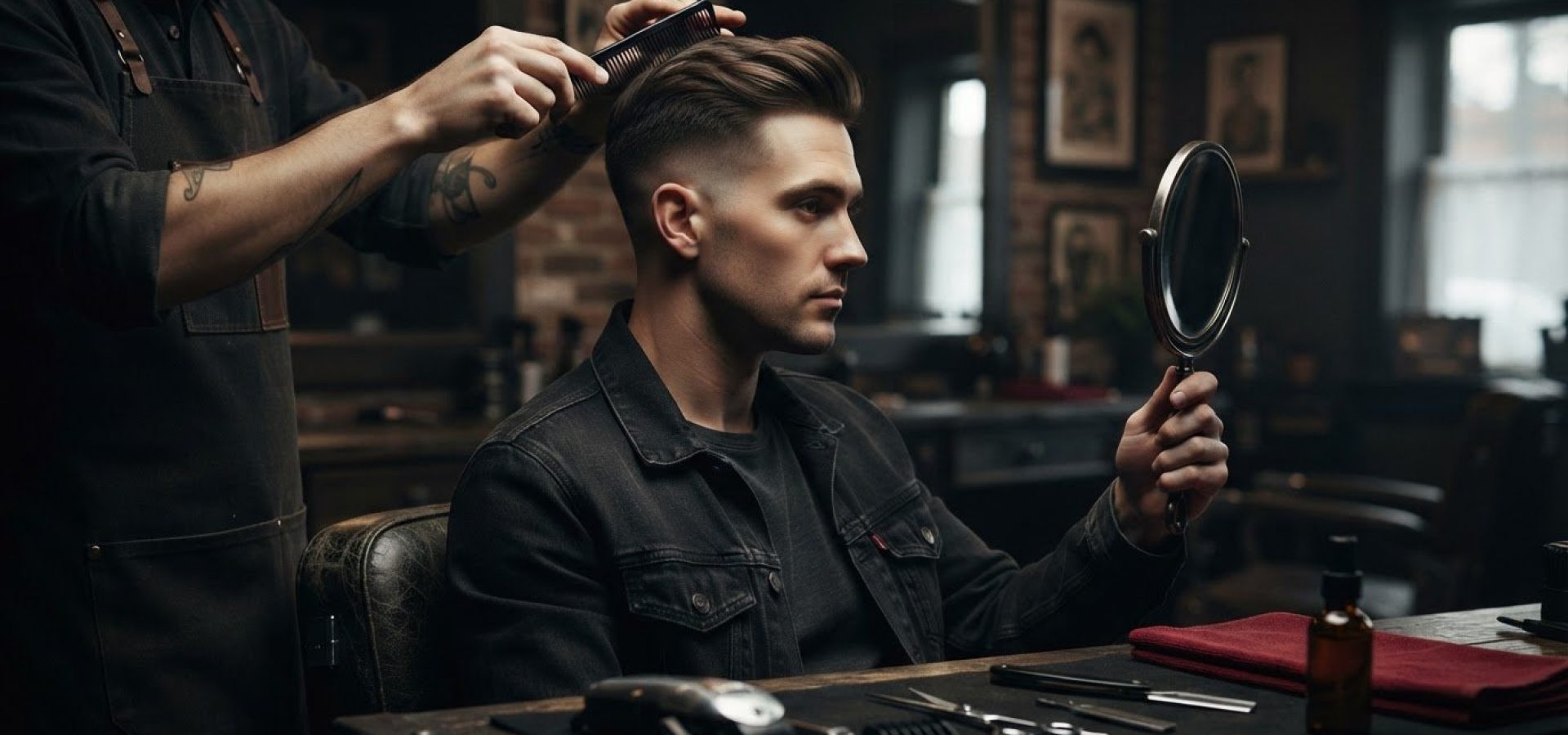
What if the best way to keep your fade looking sharp is to leave the clippers alone? As the sides grow out, it’s natural to want to clean up the edges yourself. But one uneven pass can leave a harsh line or disturb the blend. Learning how to maintain a fade between haircuts starts with knowing what you can care for at home, and what’s better left to your barber.
You can keep your cut looking tidy without trying to recreate the fade. Wash when your hair needs it, dry gently and style the longer sections with a light touch. Before using clippers or a trimmer, consider whether you can clearly see the area and know exactly how much length you want to remove. If not, leave it alone.
This guide covers daily care, low-risk upkeep and the signs that it’s time to book a barber. You’ll also learn why trimming the fade at home can leave an uneven result, and how to make your next visit more useful by explaining what you want to keep or change.
Key Takeaways
- Learn how regrowth softens a fade and why home care can tidy hair without recreating the barber’s blend.
- Follow a straightforward wash, dry and style routine that suits your hair texture and preferred finish.
- Use a quick mirror check to see what’s safe to manage at home, and what’s better left untouched.
- Find out how to maintain a fade between haircuts with a practical checklist for busy days.
- Recognize when styling no longer restores the shape, so you can avoid uneven clipper fixes and book a barber refresh.
How a fade changes between haircuts, and what you can realistically maintain
A fade is a gradual change in hair length, from shorter hair near the sides or neckline to longer hair higher up. Its clean look comes from how smoothly those lengths meet. As hair grows, the shortest areas become more visible and the longer sections gain length too. This reduces the contrast that made the transition look crisp. It’s a normal change as the cut grows out, not necessarily a sign that anything went wrong.
It helps to separate the fade’s shape from general grooming. The shape is the placement and smoothness of the transition, along with details such as the outline around the temples and neck. Clean hair, controlled styling and a tidy overall appearance can help the cut look cared for. They don’t change where the fade starts or how its lengths blend.
Between-haircuts maintenance can keep your hair clean, settled and presentable; it can’t reset the fade or recreate a barber’s blended transition. That’s the practical answer to how to maintain a fade between haircuts. Focus on what supports the style, and don’t expect home care to restore the original contrast.
Why the blend looks less sharp as hair grows
Regrowth changes how the shorter and longer sections sit beside each other. Hair that was clipped very close begins to show more, while the hair above it continues to lengthen. The transition can look less distinct, especially around the temples and above the ears. This softening is a normal part of hair growth, not necessarily a sign that the fade was cut poorly.
The change won’t look identical on everyone. Dark hair against lighter skin, for example, may show contrast differently than lighter hair or a closer match between hair and skin colour. Wavy or curly hair can appear fuller as it grows, while a cowlick or different growth direction may make one area seem less even. These details affect how the fade looks in the mirror, not whether you’re caring for your hair properly.
What home maintenance can, and cannot, change
Washing away oil and product, drying without rough handling, and using a small amount of suitable styling product can help hair sit neatly. You can also check the overall outline in good light and gently arrange hair that’s sticking up. These steps improve presentation. They don’t shorten regrowth or restore the original shift from very short hair to longer hair.
That blended transition takes controlled clipper work and a clear sense of how the lengths meet. A quick pass at home may remove more hair from one spot than another, or create a hard line where the fade should remain gradual. Even a small change around the temple or neckline can affect the balance of the cut.
Set a realistic expectation: upkeep helps your haircut look tidy as it grows, but it doesn’t make the haircut new again. If the blend itself needs reshaping, a barber can assess the lengths and refresh the fade. Until then, keeping the hair clean and styled is a sensible way to let it grow without risking an uneven patch.
A simple wash, dry and style routine for keeping a fade neat
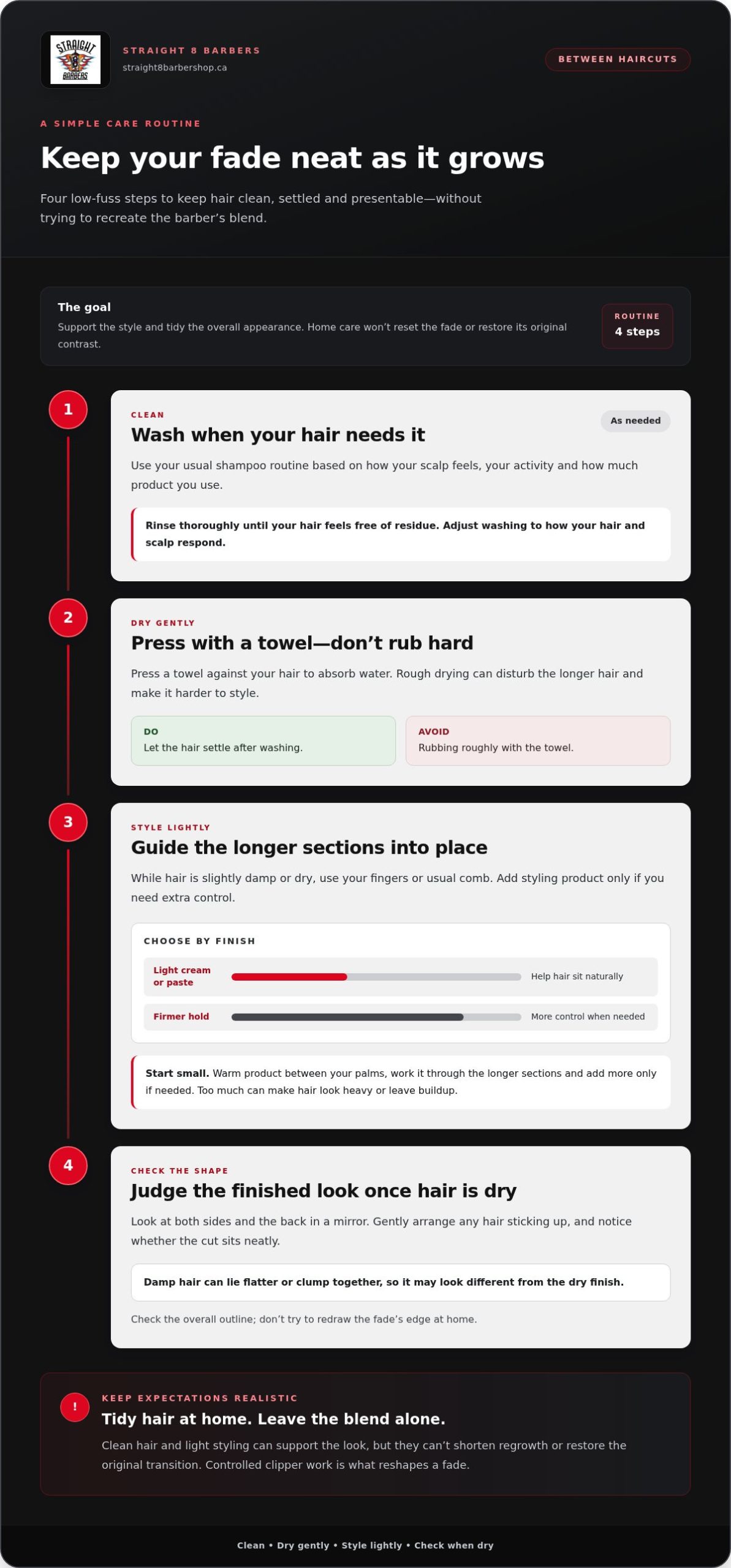
A steady routine can help your haircut look cared for without special tools or a complicated product shelf. The aim isn’t to make the fade sharper than it is. It’s to keep the hair clean, help the longer sections sit well and check the overall shape once it’s dry. That’s a practical approach to how to maintain a fade between haircuts, and it can fit into your regular grooming habits.
Use this sequence as a guide, adjusting it to your scalp, hair texture and usual style:
- Clean your hair as needed. Use your usual shampoo routine based on how your scalp feels, your activity and how much product you use. Rinse until your hair feels free of residue.
- Dry gently. Press a towel against your hair to absorb water instead of rubbing hard. Rough drying can disturb the longer hair and make it harder to style.
- Set the longer sections. While your hair is slightly damp or dry, guide it into place with your fingers or usual comb. Add a small amount of styling product only if you need extra control.
- Check the finished shape. Once your hair is dry, look at both sides and the back in a mirror. Notice whether it sits neatly, rather than trying to redraw the fade’s outline.
Wash and dry without roughing up the hair
There isn’t one washing schedule that suits every scalp and hair type. Wash when your hair feels oily, sweaty or weighed down by product, and adjust based on how it responds. Rinse thoroughly so leftover shampoo or styling product doesn’t leave your hair feeling coated. After washing, use a towel gently and let your hair settle before judging the cut. Damp hair can lie flatter or clump together, so its shape may look different from the dry finish.
Use styling products lightly
Choose a product to suit your hair texture and the finish you want, not the fade itself. A light cream or paste can help longer hair sit naturally, while a firmer hold may suit a style that needs more control. Start with a small amount, warm it between your palms and work it through the longer sections. Add more only if needed. Too much can make hair look heavy or leave buildup that’s harder to rinse out.
Straight, wavy, curly, fine and thick hair can all respond differently to the same product. Use what already works for your hair before buying something new. If your style looks stiff or greasy, use less next time or wash out the excess. The sides don’t need extra product to preserve the blend.
Routine in brief: clean your hair when it needs washing, dry it gently, style the longer sections lightly, then check the complete shape when dry. No new tools are required. If the blend needs professional attention at your next cut, Straight 8’s zero and skin fades are available in British Columbia.
Mirror checks and clippers: what is safe to tidy at home?
A mirror can help you notice how your fade is growing, but noticing a change doesn’t mean you need to trim it. Check both sides in consistent lighting, with your head held naturally rather than tilted to inspect one spot. Look at the overall outline and how the hair sits. A tiny difference can seem more noticeable when you focus on it up close.
Use this guide to judge the relative risk of common upkeep tasks:
| Task | Risk | What to keep in mind |
|---|---|---|
| Checking the shape in a mirror | Low | Observe the overall look without trying to correct small differences. |
| Styling the longer hair | Low | Arrange it with your usual comb or fingers; this doesn’t alter the fade. |
| Tidying the neckline | Moderate | It’s easy to shift the outline or make one side higher than the other. |
| Changing the fade with clippers | High | A wrong guard or uneven pass can leave a visible step or patch. |
Visual checks and styling are the safer ways to manage your appearance between cuts. Neckline work carries more risk because the hairline is part of the haircut’s outline. Clipper work on the fade itself is riskier still. A small change in length can stand out against the surrounding hair, especially if you can’t see the area clearly or hold the clippers at the same angle on both sides.
Low-risk checks that help you spot changes
Check the sides and back in ordinary, even light, and keep your head level. Look for general neatness rather than judging each strand or comparing tiny details between sides. If the longer hair is sticking out, try arranging it before deciding the shape needs work. Use the mirror to notice how the cut is settling, not as an instruction to recut it.
Why home clipper touch-ups can disrupt the blend
An incorrect guard can take off more length than intended. Uneven pressure or an awkward angle can leave one area shorter, creating a visible step. Trying to fix that patch with another pass may spread the unevenness. Carving a new line or raising the fade to make one spot match can change the whole shape.
Barber-level blending is skilled clipper work, not just running clippers over a rough-looking spot. Stop if a touch-up would mean moving between multiple lengths to make the transition look smooth. Repeated corrections can leave the fade higher or less even than before. A calm mirror check and light styling are often the better choice while you wait for a barber to refresh the blend.
A practical between-haircuts checklist for busy days
A useful routine should fit the day you have, not add another chore. On a regular morning, the basics are enough: clean your hair if it needs it, dry it gently, style the longer sections and check the overall outline. After exercise or a long day outdoors, you may want to rinse away sweat or debris before styling again. Leave the fade itself alone if it still looks balanced.
Use this checklist as a flexible guide. You don’t need to do every step every day:
- Check what your hair needs. If it feels clean and comfortable, you may not need to wash it. If it feels sweaty, oily or weighed down, wash or rinse according to your usual routine.
- Dry before judging the shape. Gently towel-dry, then let your hair settle or finish drying as you normally would. Damp hair can lie differently, so wait before deciding that the outline looks uneven.
- Style the longer sections. Use your fingers or usual comb to guide the top into place. Add a little of a product you already use only if your style needs more control.
- Check the full outline. Look at both sides and the back in good light. If the shape looks balanced, leave the fade alone rather than trying to sharpen it.
On a busy workday, a quick check after getting dressed may be all you need. After a workout, rinse or wash if sweat is making your hair uncomfortable, then restyle once it’s dry. If your schedule changes, keep the routine short and respond to what your scalp and hair actually need. There’s no need to force the same steps at the same time every day.
Adjust the routine to your hair and styling habits
Straight, wavy, curly and coily hair can sit differently as it grows, and each texture has its own natural movement. Let the longer top guide your styling: smooth it into place, work with a wave or curl, or use your fingers to keep natural volume. Choose the amount of product and level of hold that suit your hair and preferred finish. A routine that works for someone else may not feel right for you.
Keep the outline tidy through ordinary routines
After drying, check the outline before adding more product. That way, you can see how the hair naturally sits and avoid weighing it down while trying to correct a shape that may simply be damp or flattened. Following exercise or time outside, gently rinse away sweat or debris when needed. If the fade still looks balanced, let it be. This is the practical heart of how to maintain a fade between haircuts: care for your hair, then resist unnecessary trimming.
When you’re ready for your next cut, learn what to expect at a men’s haircut in Kamloops, or book your next haircut with Straight 8 Barbers.
When home upkeep is no longer enough: let a barber refresh the fade
There’s a point when a careful wash and a little styling won’t bring the shape back into focus. The outline may look softer than you like, or the blend may still appear uneven once your hair is dry and settled. That doesn’t mean you’ve done anything wrong. It simply means the haircut has grown beyond what routine grooming can tidy.
You don’t need to wait for a particular number of weeks or a set amount of regrowth before booking. Go by the result you want. If the fade no longer feels balanced, or you’re repeatedly checking and correcting the same area, a barber can assess the shape and refresh it with controlled clipper work.
Signs it is time for a professional refresh
Look for changes that remain visible after your usual styling: a softened outline around the temples or neckline, a blend that seems patchy, or one side that looks noticeably different from the other. A small shift may be less obvious in some lighting, so check the overall shape in a mirror rather than judging one spot up close. If the cut still doesn’t sit as you’d like once it’s dry, a barber refresh is a sensible next step.
Resist trying to fix an uneven-looking blend by taking the clippers back to it. Each correction can remove more hair, raise the fade or make the transition harder to even out. When restoring the shape would involve adjusting several lengths, leave that work to a barber. It’s easier to talk through what you’d like changed than to work around new clipper marks.
Bring a clear idea of the finish you want
Before your visit, think about what you’d like to keep and what no longer feels tidy. You might say that you like the current height but want the sides blended more cleanly, or that you’d prefer the outline kept natural. A reference image can help show the shape you have in mind. Use it as a guide, then describe which details matter most to you.
That simple handoff makes the appointment clearer. You don’t need technical barber terms or a long explanation. Sharing what’s working, what isn’t, and whether you want a similar finish or a change gives your barber a useful starting point. A photo of your previous cut, if you have one, can also help communicate the look you want to maintain.
Straight 8 Barbers offers zero and skin fades in Kamloops and Vernon, British Columbia. If you’re considering how to maintain a fade between haircuts, remember that home care can keep the style presentable, while a barber can refresh the blend when it needs more than styling. You can book your fade online or visit Straight 8 Barbers when you’re ready for a tidy-up.
Keep your next fade on your terms
A good between-cuts routine should make grooming feel simpler, not give you another detail to monitor. Decide what “tidy enough” looks like for you, then let that guide when you leave the style alone and when you want a fresh start. Your fade doesn’t need to look newly cut every day to look well cared for.
That’s the balance at the heart of how to maintain a fade between haircuts: keep up with your hair in ways that suit your day, and save precise changes to the blend for your barber. Straight 8 Barbers has locations in Kamloops and Vernon, serving clients across British Columbia, including Kelowna, Lake Country, Salmon Arm, Merritt, Sicamous, Armstrong, Surrey, Penticton, Revelstoke and Abbotsford. Walk-ins and online bookings are accepted.
When you’re ready to refresh your fade, book online or visit Straight 8 Barbers. Bring a clear sense of the finish you want, and let the next cut reset the shape. With a little regular care and the right help when you need it, you can feel comfortable wearing your fade as it grows.
Frequently Asked Questions
Can I keep a fade looking neat without using styling products?
Yes, you can keep a fade neat without styling products. Clean hair and a natural dry are often enough, especially if the longer hair sits well on its own. After washing, arrange the top with your fingers or a comb and let it dry before checking the result. If it falls into place comfortably, there’s no need to add product just because it’s part of someone else’s routine.
Is it bad to wear a hat after getting a fade?
No, wearing a hat after a fade isn’t inherently bad. A snug cap can temporarily press down the longer hair or leave it flattened, but it won’t change the clipper work. Once you take it off, give your hair a few moments to settle, then use clean, dry fingers to lift or arrange the top. If the hair stays compressed, lightly dampen that area and let it dry in place.
What should I do if my fade gets sweaty after a workout?
If your hair is sweaty after a workout, rinse it with water or wash it if it feels oily or uncomfortable. Pay attention to the scalp and hairline, where sweat can collect, and rinse thoroughly. Pat your hair dry rather than rubbing it hard. Before adding styling product, let your hair dry enough to see how it naturally sits. You may find a quick rinse and restyle is all you need.
Can sleeping on one side make a fade look uneven?
Sleeping on one side can press the hair down temporarily, making that area look flatter or different from the other side when you wake up. It doesn’t change the fade’s length or blend. Try lightly dampening the flattened section, then guide it back into place as it dries. Check the sha