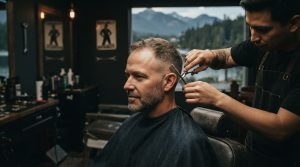
A short, textured cut is often the best haircut for men with thinning hair, especially when the top has enough length to add movement. A crew cut can soften a receding hairline, while a buzz cut blends thinner areas into a clean, even look. The right choice depends on where your hair is thinning and how much styling you want to do.
It’s understandable to want a cut that feels natural rather than one that draws attention to thin spots. Thinning often starts around the hairline or crown, and a thoughtful shape can work with those changes instead of trying to hide them completely.
Here, you’ll learn what thinning hair can look like, which cuts and facial-hair styles may suit different patterns, and how to style and maintain your choice. From forward-brushed crops to short fades, the aim is a practical look that feels like you and fits your daily routine.
Key Takeaways
- Look at where your hair is thinning before choosing a cut; a crew cut or buzz cut can suit different patterns.
- Forward-brushed crops and Caesar cuts can work with a receding hairline, but their fit depends on where thinning is most noticeable.
- A beard can add balance to a short or shaved hairstyle if you enjoy wearing facial hair.
- Use root lift and lighter styling techniques for a fuller look, and plan regular trims to keep the shape tidy.
- Consider your hair texture, preferred length, and daily routine when comparing styles such as fades, textured cuts, and longer looks.
1. What Is Thinning Hair in Men?
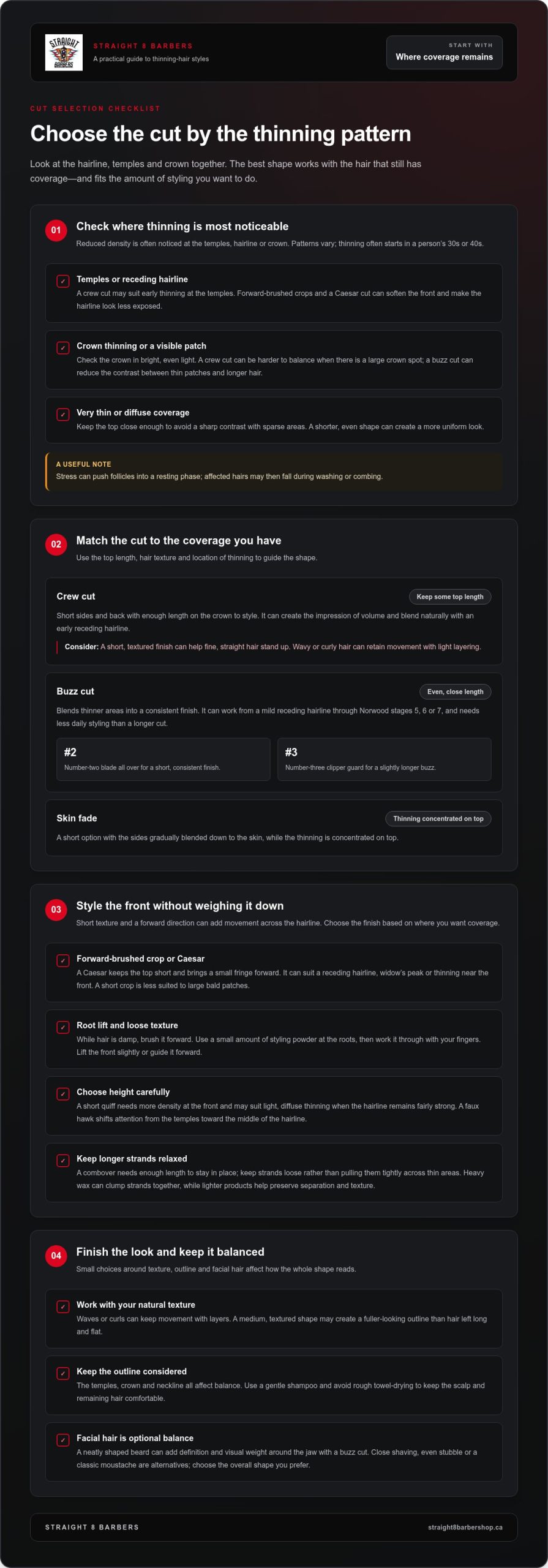
Thinning hair means reduced density, often noticed at the temples, hairline or crown. Male hair thinning often starts in a person’s 30s or 40s, though the pattern varies. A receding hairline can leave the forehead more exposed, while crown thinning may create a visible patch at the back. Stress can also push hair follicles into a resting phase, after which affected hairs may fall during washing or combing.
The best haircut for men with thinning hair works with the areas that still have coverage. A crew cut keeps the sides and back short while leaving enough length on the crown to style. That contrast can create the impression of volume and blend naturally with a receding hairline. It can suit early thinning at the temples, but a large crown spot or very thin, diffuse coverage may be harder to balance with this shape.
For a crew cut, consider how much length remains on top and whether it lies flat. A short, textured finish can help fine, straight hair stand up and look fuller. Wavy or curly hair can keep its natural movement with light layering. Keep the top close enough to avoid a sharp contrast with sparse areas. A barber can assess the hairline and crown together, rather than choosing the top length alone.
A buzz cut takes the hair down to an even, close length, blending thinner spots into a more uniform look. It can work for hair loss from a mild receding hairline through Norwood stages 5, 6 or 7. A number-two blade all over creates a short, consistent finish. For a slightly longer buzz, John Legend’s natural style uses a number-three clipper guard. The shorter the cut, the less daily styling it needs.
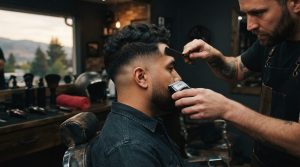
Choose between a crew cut and buzz cut by checking the crown in bright, even light. If the top still has useful coverage, a crew cut can retain shape and styling options. If thin patches stand out against longer hair, a buzz cut can reduce that contrast. A skin fade is another short option when thinning is concentrated on top, with the sides gradually blended down to the skin.
Keep the scalp and remaining hair comfortable with a gentle shampoo, and avoid rough towel-drying. A shorter style still needs a considered outline: the temples, crown and neckline affect how balanced the cut looks. Bring a clear example of the length you prefer, such as a short buzz or a crew cut with a textured top. Then discuss how much upkeep the shape will need.
2. Forward-brushed and Caesar styles for concealing a receding hairline
Forward-brushed cuts and short textured crops can make fine hair look fuller by adding movement across the front. Brush the hair forward while it’s damp, then use a small amount of styling powder to build texture without flattening the strands. This approach can soften a receding hairline and help cover small thin spots. A short crop is less suited to large bald patches, where the difference in coverage remains visible.
A Caesar cut keeps the top short and brings a small fringe forward. Its shape can suit a receding hairline, a widow’s peak, or thinning near the front. The even, forward direction can make the hairline look less exposed without relying on long strands. If thinning is concentrated at the crown, consider how the cut will look from above as well as from the front.
Which haircuts make thinning hair look fuller? Short textured crops, Caesar cuts, and styles with lift at the roots can add visual volume. The best fit depends on whether thinning is at the temples, front, or crown, as well as your hair’s natural texture.
For a stronger textured finish, use styling powder sparingly at the roots and work it through with your fingers. Then lift the front slightly or guide it forward, depending on the hairline you want to soften. A combover can suit longer top hair swept to one side, but it needs enough length to stay in place. Keep the strands loose rather than pulling them tightly across thinning areas.
A short quiff needs more density at the front because its height draws the eye upward. It can suit light, diffuse thinning when the hairline remains fairly strong. If the temples have receded sharply, a high front may emphasize that contrast instead. A faux hawk offers another option: its central ridge shifts attention from the temples toward the middle of the hairline.
Men with waves or curls can keep more length and use layers to bring out natural movement. A medium, textured shape may create a fuller-looking outline than hair left long and flat. Avoid styles that hang straight against the scalp, since they can make thinning areas easier to see. Heavy wax can also clump strands together; lighter products help preserve separation and texture.
To compare a forward-brushed crop with a Caesar shape, bring a clear example to a men’s haircut appointment and point out where you want to keep length. That gives the cut a practical starting point: the hairline, crown, and daily styling routine.
3. Beards and facial hair to balance short or shaved hairstyles
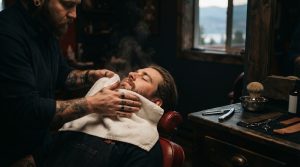
A buzz cut with a beard can balance a closely cropped head with visible facial hair. This pairing suits men who enjoy wearing a beard and can grow one evenly. The beard adds definition around the jaw, while the short cut keeps attention from settling on individual thin areas. A close shave can create a similar balance if a beard isn’t your preference. Choose the combination for its overall shape, not as a way to disguise hair loss completely.
Match the beard’s outline to the haircut. For a short buzz, a neatly shaped beard can give the lower face more visual weight. With a shorter, lighter beard, clean cheek and neck edges help keep the look deliberate. If your hair is shaved close, even stubble can create contrast without adding much length. A classic moustache is another option, especially if you prefer facial hair without a full beard. Keep the balance simple: one strong feature is often enough.
Longer hair can also work with thin hair, provided it has movement rather than lying flat against the scalp. A mop-top shape leaves more length around the head, which can make the hairline and scalp less visible. For fine strands, ask for a shape that follows the hair’s natural direction instead of relying on heavy coverage. Longer hair isn’t automatically fuller-looking; a flat sweep can separate and expose thinning areas. Regular shaping keeps the outline intentional.
Curly and wavy hair offers natural texture that can give a cut a fuller appearance. Layers can help curls move rather than bunch into one heavy shape. If you prefer shorter hair, keep enough length for the curl pattern to show, then use your fingers to arrange it. A close crop can still suit waves, but cutting too close removes the texture that gives the style character. Choose the length based on how your curls sit when dry.
For a practical routine, wash gently with shampoo and conditioner, then let curls settle before styling. A small amount of lightweight product can define texture without making strands stick together. Use a comb to shape beard edges and a trimmer to keep the neckline tidy. If you’re growing facial hair, give its outline time to develop before settling on a final shape. A beard can complement a short haircut, but comfort, upkeep, and your natural growth pattern should guide the choice.
4. Haircut maintenance and styling advice
Trim timing depends on the cut’s length and how clearly its outline shows growth. Super-short cuts, including buzz cuts and fades, need a trim at least once a month to keep their shape. Longer styles, such as a quiff, can be trimmed every one to two months. For a grown-out style, trimming the ends every 8-10 weeks helps maintain length without losing the overall shape.
For thinning hair, regular trims every 4-6 weeks help keep the style in good shape and prevent split ends. That schedule can suit a textured crop or crew cut that loses definition as the sides grow. Bring a reference photo to your barber, then describe what you want to preserve: length on top, a soft side part, or a close neckline. Clear details make it easier to maintain the same shape at each visit.
At home, start with gentle shampoo and conditioner. Rinse thoroughly, then pat your hair dry instead of rubbing it hard with a towel. For a fuller-looking style, lift the roots with your fingers while blow-drying upward. Direct the airflow from the front or side, then guide the hair forward or into a side part. This creates lift without pulling strands flat against the scalp.
Choose styling products that keep strands separate. Heavy wax can clump fine hair and make thinning areas more noticeable, so use a light touch with any product. Styling powder can add texture, while hairspray brushed through the hair can hold its shape without a stiff finish. For a combover, lift the roots as you dry, then sweep the longer strands gently to one side.
Scalp care matters with a shaved head or very close fade. Use sunscreen when prolonged sun exposure is expected, especially across the exposed crown and hairline. A buzz cut keeps daily care simple, but the scalp still needs attention after time outdoors. If dryness follows shampooing, use conditioner on the remaining hair and rinse it well.
Watch how your style changes between trims. If a fade loses its clean blend quickly, keep a regular trim schedule; if a longer quiff still sits neatly, you may be able to wait longer between cuts. Ask your barber to remove only a little from a grown-out style when preserving length matters. These small adjustments help the cut work with changing density, rather than relying on product to conceal it.
5. Haircut ideas for men with thinning hair
Choose a fade, crew cut, buzz cut, or textured crop according to where thinning shows and how much length you want. A fade softens the sides, a crew cut keeps some length on top, and a buzz cut blends coverage evenly. A textured crop adds movement, which can help straight or fine hair look fuller.
Ask your barber for short sides and a textured top if you want lift without a long styling routine. Point out whether your main concern is the temples, crown, or overall density, then agree on how much length to keep. A photo can help show the finish you like, but describe what you’d change to suit your own hairline.
For an even, low-maintenance shape, a number-two blade all over gives the hair a short, consistent length. A buzz cut can suit men with hair loss ranging from a mild receding hairline to Norwood stages 5, 6, or 7. If you prefer a gradual blend, a short fade gets closer down the sides and back; a bald fade blends down to the skin.
A crew cut can work for early thinning at the temples when the crown still has coverage. Keep the top short enough to avoid lying flat, but long enough to add shape. It may be less suitable for a large crown bald spot or very thin, diffuse hair. A Caesar cut is another option when thinning is at the crown without noticeable frontal baldness.
For straight or fine hair, a short textured crop can help strands stand up rather than cling to the scalp. Men with wavy or curly hair can keep texture with a layered top. A classic quiff suits light thinning when the hairline remains fairly strong; a few finger-widths on top gives it room to lift. Avoid slicked-back or long, flat styles if they expose thin areas.
For more length, an undercut keeps the sides shorter while leaving the top longer. A square scissor cut inspired by Nicholas Hoult leaves about 1.5 inches on top, with sides and back not cut too close. Men who want a side part can try a sweep-over, while those preferring a simpler routine may choose a crop top.
Bring a reference photo and tell your barber how much time you want to spend styling. To shape a cut around your hairline and preferred length, book a men’s haircut.
Straight 8 Barbers: Mens Haircut
Straight 8 Barbers can help you choose a cut that suits your hairline, preferred length, and daily routine. A Mens Haircut gives you a chance to discuss how a crew cut, textured top, or other shape will work with your thinning pattern. For closely cropped sides, consider a Zero/Skin Fade. If facial hair is part of your look, a Haircut & Beard Trim can bring the overall shape together. Men’s Haircut (60+yrs) is also available for mature men.
Bring a reference photo and explain what you want to keep, such as length on top or a softer outline at the temples. Visit straight8barbershop.ca to arrange your next haircut.
Make your next cut feel like your own
Your next haircut doesn’t need to disguise every change in your hair. It can give your features a clear shape and fit the way you like to get ready. The best haircut for men with thinning hair is the one that works with your hairline, personal style, and comfort level, rather than chasing a look that feels unlike you.
If you’d like help choosing a shape, Straight 8 Barbers offers a Mens Haircut, a Zero/Skin Fade, and a Haircut & Beard Trim. Bring a photo or describe what you want to keep, such as length on top or a softer blend at the sides. A clear conversation gives your barber a practical starting point for a cut that suits you.
Contact Straight 8 Barbers to plan your next haircut. Take the time to find a style that feels comfortable, easy to maintain, and distinctly yours.
Frequently Asked Questions
What Is Thinning Hair in Men?
Thinning hair is a gradual reduction in hair density that can make the scalp more visible. It may show first at the temples, along the front hairline, or around the crown. Male hair thinning often starts in a person’s 30s or 40s, but the pattern differs. Stress can also shift follicles into a resting phase, followed by increased shedding during washing or combing.
How Can a Fade Help with Thinning or Balding Spots?
A fade can reduce the contrast between short side hair and thinner coverage above. The gradual blend draws a clean outline around the head instead of leaving a stark change in length. For thinning concentrated across the top, shorter sides may help the overall cut look more balanced. A bald fade reaches the skin at the lower sides, so consider how much scalp you want visible.
What Makes the Combover a Go-To for Fuller-Looking Hair?
A combover uses longer strands across the top, swept to one side, to soften the appearance of thinning. It works best when there’s enough coverage for the hair to lie naturally without pulling it tightly over bare areas. Keep the part relaxed and use a blow-dryer to lift roots before sweeping the hair across. Heavy product can flatten strands and make the scalp more noticeable.
What men’s haircuts work best for thinning hair?
The best haircut for men with thinning hair depends on where density remains and how much styling suits your routine. A crew cut or textured crop can work with short, fine hair; a buzz cut creates an even finish. A fade can sharpen the sides, while a Caesar cut brings a short fringe forward. In Kamloops, a barber can shape a cut around your crown and temples.
What are the best short haircuts for men with a receding hairline?
A short crew cut, Caesar cut, or buzz cut can suit a receding hairline. Choose a crew cut when you want some shape on top, or a Caesar fringe when you prefer hair directed forward. A buzz cut keeps the length even across the head. The deciding detail is how the temples and crown look together, not just the front hairline in a mirror.
How should men style thinning hair to add volume?
Start with damp hair and direct a blow-dryer upward at the roots to build lift. Use your fingers to guide the top into place, rather than pressing it flat with a comb. Styling powder can add texture; apply a small amount and work it through the roots. Avoid heavy wax, which can clump strands together. A light hairspray can hold the finished shape without stiffness.
How often should men with thinning hair get a haircut?
For a tidy shape, plan a trim every 4-6 weeks. Very short cuts, including buzz cuts and fades, generally need attention at least once a month to keep their outline crisp. Longer styles such as a quiff can go one to two months between trims. The sides often show growth first, while the top’s length and styling needs help determine when the whole cut feels ready.