




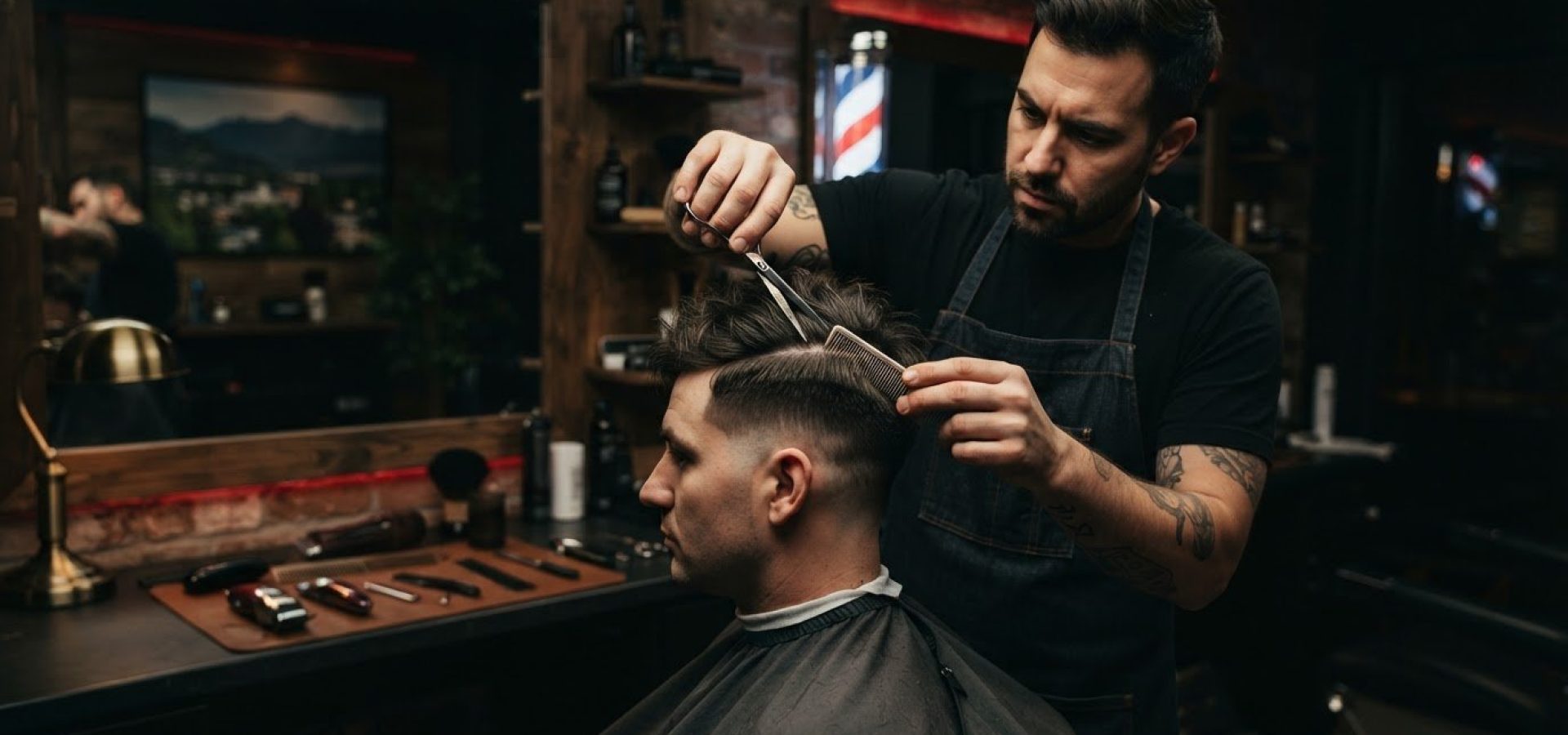
The quickest way to make a bad fade worse is to take clippers to it before you know what needs fixing. If the blend looks uneven or a hard line stands out, it’s tempting to reach for a shorter guard. But learning how to fix a bad fade haircut starts with a careful look, not another pass with the clippers. A barber may be able to improve some issues; others need time and more growth before they can be reshaped without taking off extra length.
It’s frustrating when a haircut doesn’t look the way you expected, especially when you’re unsure whether a small correction will help or leave you with an even shorter fade. This guide explains what you can safely do now, when to leave the clippers alone, and how to describe the problem clearly to a barber. You’ll also learn when growing the fade out may be the better option. Straight 8 Barbers offers zero and skin fades at its locations in Kamloops and Vernon, where a barber can discuss your haircut and what you’d like to change.
Key Takeaways
- Pinpoint whether the concern is the blend, fade height, or symmetry before deciding what to do next.
- A visible line may need the surrounding lengths adjusted, not just the line itself trimmed away.
- Styling can soften the look for now, but it won’t correct uneven lengths.
- Decide how much length you’re comfortable losing, then weigh a barber’s assessment against letting the fade grow out.
- Before a zero or skin fade correction, explain what looks wrong and how much length you want to keep.
How to tell what went wrong with your fade haircut
A disappointing fade can be hard to ignore, especially when a line or uneven blend catches your eye every time you pass a mirror. Before trying to correct it, pause. A rushed clipper pass can remove more length and make the fade harder to balance. First, identify what looks off: the blend, the height, or the balance between the sides.
Get a clear view before deciding. Check your hair in natural light, with it sitting as it normally does. Look straight on, then turn to see both sides and the back if possible. Mirror angles and overhead lighting can exaggerate shadows, so compare the sides from similar positions and under the same light.
Is the fade too high, uneven, or patchy?
A fade that’s too high has a transition that sits above the level you wanted, making the shorter area more prominent. An uneven fade is different: the transition may sit higher on one side than the other, even if the overall height is close to what you asked for. Patchiness looks like sections that don’t flow together, with areas that seem darker, lighter, or abruptly disconnected.
Check whether the concern is visible from more than one angle. Note where it starts, such as above the temple or behind the ear, and whether it’s on one side or both. That description gives a barber something specific to assess, unlike saying only that the whole cut looks “uneven.”
Is there a harsh line or unfinished blend?
A visible band can interrupt the gradual change from shorter hair to longer hair. It may look like a stripe or shelf between lengths. That’s a blending concern, not the same as a neckline or outline that looks too sharp, too low, or differently shaped than you expected. Describe the specific edge or area that bothers you, since each issue calls for a different assessment.
Hair doesn’t sit the same on every head. Growth direction, texture, and natural patterns can make one spot look darker or less even, even when the cut blends elsewhere. Notice how your hair lies at rest instead of judging it only after brushing it in a different direction.
Before seeking a correction, make a short note of what you see. Separate what you dislike from what you’d like to keep.
- Location: Identify the area, such as the temple, above the ear, or back of the head.
- Issue: Describe whether the fade seems too high, uneven from side to side, patchy, or marked by a visible band.
- Preference: Decide whether you want to preserve as much length as possible or would accept a shorter blend.
- View: Check both sides and the back in natural light before settling on your assessment.
This gives a barber a clearer starting point and helps separate a specific problem from the understandable feeling that the whole haircut is wrong. Once you know what you’re seeing, you can consider whether it needs a barber’s eye or simply more time to grow.
Why a fade can look wrong, and what can actually be corrected
A fade is a gradual change in hair length, moving from shorter sections into longer ones. The barber creates that transition by blending the different lengths instead of leaving a sharp step between them. If one part looks off, the cause may be beside the spot you notice. A dark band, for example, can stand out because the lengths above or below it don’t connect smoothly.
A fade correction often means balancing the surrounding lengths, not simply trimming the visible line. Cutting directly into a line without considering the hair around it can shift the problem or make the overall fade shorter. The right approach depends on the length remaining, where the transition sits, and the shape of the cut.
When a barber may be able to improve the blend
An isolated line, an uneven transition, or a small difference between sides may be possible to improve. A barber can assess how much length is available around the area and whether the shape of the fade allows the blend to be adjusted. A minor issue may need a different approach from a line that runs across a larger section, and not every fade can be fully corrected in one visit.
For example, if a band is visible above the ear, blending may involve working with hair on either side of it. The barber also needs to consider how that adjustment connects to the rest of the cut. Removing more hair can soften a line, but it may also make the fade shorter or raise its overall appearance. Be clear about how much length you’re willing to lose before choosing a correction.
When growing the fade out may be the better choice
If the fade sits higher than you asked for, it can’t be lowered immediately while keeping the same short length. Hair has to grow back below the current transition before there’s enough length to reshape where the fade begins. A barber may be able to balance the cut, but that could mean taking more hair from other areas, which isn’t right for everyone.
Letting it grow gives a barber more length to work with and may open up options for reshaping the transition. How long that takes varies with your hair growth and the cut, so there’s no single timeline to count on. If keeping length matters more than changing the fade right away, waiting may be the more comfortable choice. A barber can help you understand the trade-off before any more hair comes off.
To decide, consider the issue you see, the length you want to keep, and whether you’re comfortable with a shorter result. Straight 8 Barbers offers zero and skin fades at its Kamloops and Vernon locations. Discussing the existing cut and your preferences with a barber is a more measured starting point than experimenting with clippers at home.
What to do at home after a bad fade, and what to avoid
A fresh cut can look different once you’ve washed and styled it yourself. Before deciding the fade needs more work, let your hair sit naturally and see how the shape looks in familiar conditions. Simple grooming can make it feel neater while you decide what to do. Styling changes how the hair sits, though, not the lengths underneath, so it won’t repair a patchy blend or uneven transition.
Keep at-home steps temporary and low-risk. If you’re still unsure how to fix a bad fade haircut, don’t make a quick clipper adjustment just to see whether it helps. Removing more hair can leave a barber with less length to work with later.
Low-risk ways to make the cut look neater
Wash and style your hair as usual before judging the shape. Arrange longer sections in their natural direction instead of forcing them across a spot you dislike. Tidying the neckline may make the overall outline look neater, but it won’t correct an uneven fade higher up. For a useful reference, take photos in consistent lighting and from the same angles, including both sides.
- Keep styling familiar: Use the routine and amount of product you normally would.
- Let hair settle: Check the cut once it’s dry and sitting naturally.
- Take clear photos: Use steady lighting and include the area that concerns you, plus enough of the surrounding cut to show its position.
Styling product may soften the appearance of a line or help hair sit in place temporarily. It won’t make uneven lengths even. Avoid relying on a heavily sculpted look if it feels uncomfortable or unlike your usual style.
DIY fixes that can make a fade harder to correct
Leave the blend alone if you’re not confident with clippers. Chasing one visible line can push the fade higher, while trimming only the side that looks longer may create a new imbalance. Scissors can also remove more from a small area than you intended. You could end up with shorter hair but no smoother transition.
- Don’t keep trimming one side: Check the full shape before deciding one area needs to come down.
- Don’t cut into the fade: Avoid trying to erase a band by making a narrow strip shorter.
- Don’t force a cover-up: Skip styles that need constant adjustment or feel unnatural just to hide the concern.
If you plan to have a barber assess the cut, keep your photos and describe what you notice in plain terms: where the issue is, how it looks, and what length you hope to keep. Consistent photos can help explain the concern, while an in-person look lets the barber see how the hair sits from different angles.
For now, tidy the hair without cutting into it. If you’re tempted to make another pass, pause and let a barber look at the fade before more length comes off.
How to decide between a barber correction and a grow-out
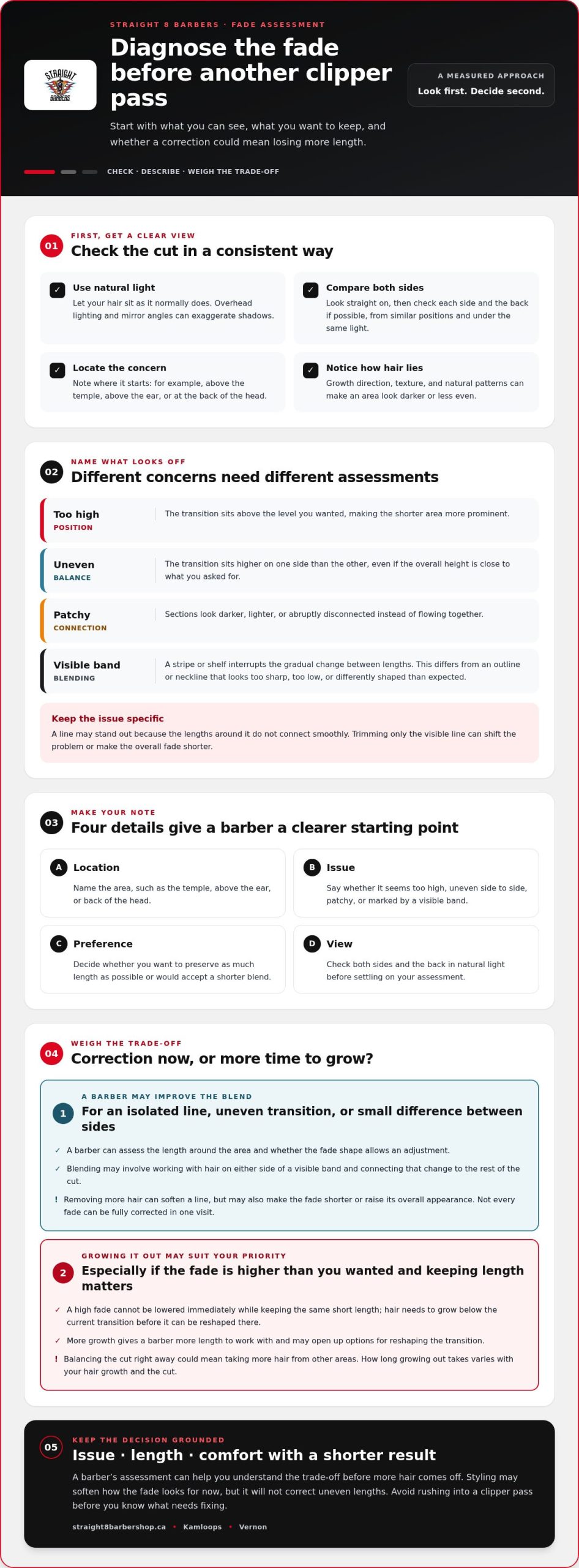
There isn’t one right response to a fade that missed the mark. A small blending concern and a fade that sits much higher than requested call for different decisions. Before booking a haircut, work through three points: identify the issue, decide how much length you’re willing to lose, then get a barber’s assessment. This keeps your goal clear and helps you weigh the trade-off before agreeing to a shorter result.
- Name the issue. Is the concern a visible line, one side sitting higher, or a fade that starts above the level you wanted?
- Set your limit. Decide whether you’d accept a shorter adjustment or whether preserving your current length matters more.
- Get an assessment. A barber can look at the shape and remaining length, then discuss whether a correction or grow-out better fits your preference.
You can return to the barber who gave you the cut and explain what isn’t working. They already know what they intended to create. If you’d rather get another perspective, a different barber can give you a fresh assessment. Either way, be specific and give them room to understand what you want before discussing changes. Focus on the result you’re after rather than assigning blame.
What to tell the barber about the fade
Be direct: “There’s a line above my ear,” “the left side looks higher,” or “the fade sits higher than I asked for.” Then describe what you want to keep, such as the length on top or the shape around the temples. Reference photos can help show the general shape you like, but hair texture, growth, and the existing cut mean they can’t guarantee an identical result.
It also helps to explain what you’d accept. For example, say whether you’re open to shortening the surrounding area to soften a line or would rather keep the length and let it grow. If you’re preparing for a barber visit, this guide to what to expect during a men’s haircut in Kamloops can help you feel more at ease explaining your preferences at the chair.
How to judge whether to correct it now
Ask yourself whether improving the balance is worth a shorter result. If the issue is a distinct line or a small difference between sides, a barber’s assessment may show whether a targeted adjustment makes sense. If the main concern is that the whole fade sits too high, waiting for growth may better match your goal. Lowering the transition right away means working with hair that hasn’t grown back yet, which can require taking more from elsewhere.
A correction isn’t necessary for everyone. You may prefer to leave the cut as it is, style it comfortably, and reassess as it grows. If you’re ready for a barber’s perspective, book a haircut or fade with Straight 8 Barbers. The shop offers zero and skin fades in Kamloops and Vernon, and you can discuss what you’d like changed before deciding how to proceed.
Getting a bad fade assessed at Straight 8 Barbers
If you’re unsure what to do next, a barber can look at the fade before any more hair is removed. You can talk through what feels off and what you’d like to keep before deciding on a change. If you’re weighing how to fix a bad fade haircut, an in-person look can help clarify whether the current length allows an adjustment or whether waiting makes more sense.
What to expect from a fade assessment
A barber can look at how the blend sits, whether the fade is higher on one side, how the transition fits the shape of the cut, and how much length remains. Bring a photo if it helps explain the shape you had in mind. Point to the part you dislike and say what you hope to preserve, such as the length above the fade or the area around your temples.
Keep the conversation practical. You might say, “This section looks disconnected, but I want to keep the length on top.” That gives the barber a clear starting point. The best next step depends on your hair as it is now, including its length, texture, and growth pattern. The barber can explain the options, but what’s possible depends on the existing cut.
- Bring a reference: Use a photo to show the general shape you wanted, not as a promise of an identical result.
- Be specific: Describe where the fade looks wrong and what you want to keep.
- Stay open to options: A barber can explain how the current length affects what can be done.
Straight 8 Barbers offers zero and skin fades. During your visit, a barber can look at the existing cut and discuss possible next steps before more hair comes off. You don’t need perfect technical terms. A simple description and a clear preference about length are enough to start the conversation.
Choose a convenient Straight 8 Barbers visit
Straight 8 Barbers has locations in Kamloops and Vernon, British Columbia. Walk-ins and online bookings are accepted, so you can choose the option that suits your plans. If you’re deciding between a correction and a grow-out, bring your photos and explain what you’d like to preserve. That keeps the conversation focused on a result that feels comfortable for you.
For readers in Kelowna, Lake Country, Salmon Arm, Merritt, Sicamous, Armstrong, Surrey, Penticton, Revelstoke, and Abbotsford, the same first step applies: identify the specific issue and avoid cutting into the blend before you know what needs changing. If you’re in Kamloops or Vernon and want a barber’s perspective, book a haircut or fade at Straight 8 Barbers.
Give your next haircut a clear direction
A disappointing fade doesn’t have to lead to a rushed decision. Give yourself room to choose a result you’ll feel comfortable wearing, whether that means a measured adjustment or letting the shape grow before changing it. Knowing how to fix a bad fade haircut is less about chasing every line and more about choosing the next step with care.
Before your next visit, think about how you want the haircut to feel day to day. Consider how much length you’d like to keep and whether you’re open to a different balance around the sides. Sharing that preference gives your barber a useful starting point and keeps the conversation centred on what works for you.
If you’re ready to talk through your next haircut or fade, book a haircut or fade at Straight 8 Barbers. Take it one step at a time. A clear plan can make the next cut feel much more comfortable.
Frequently Asked Questions
Can I fix a bad fade haircut at home?
You can tidy the style at home, b