

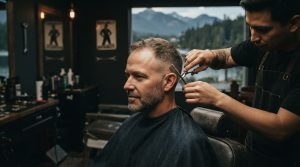
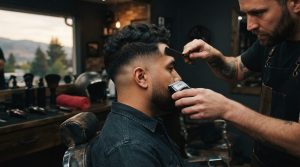
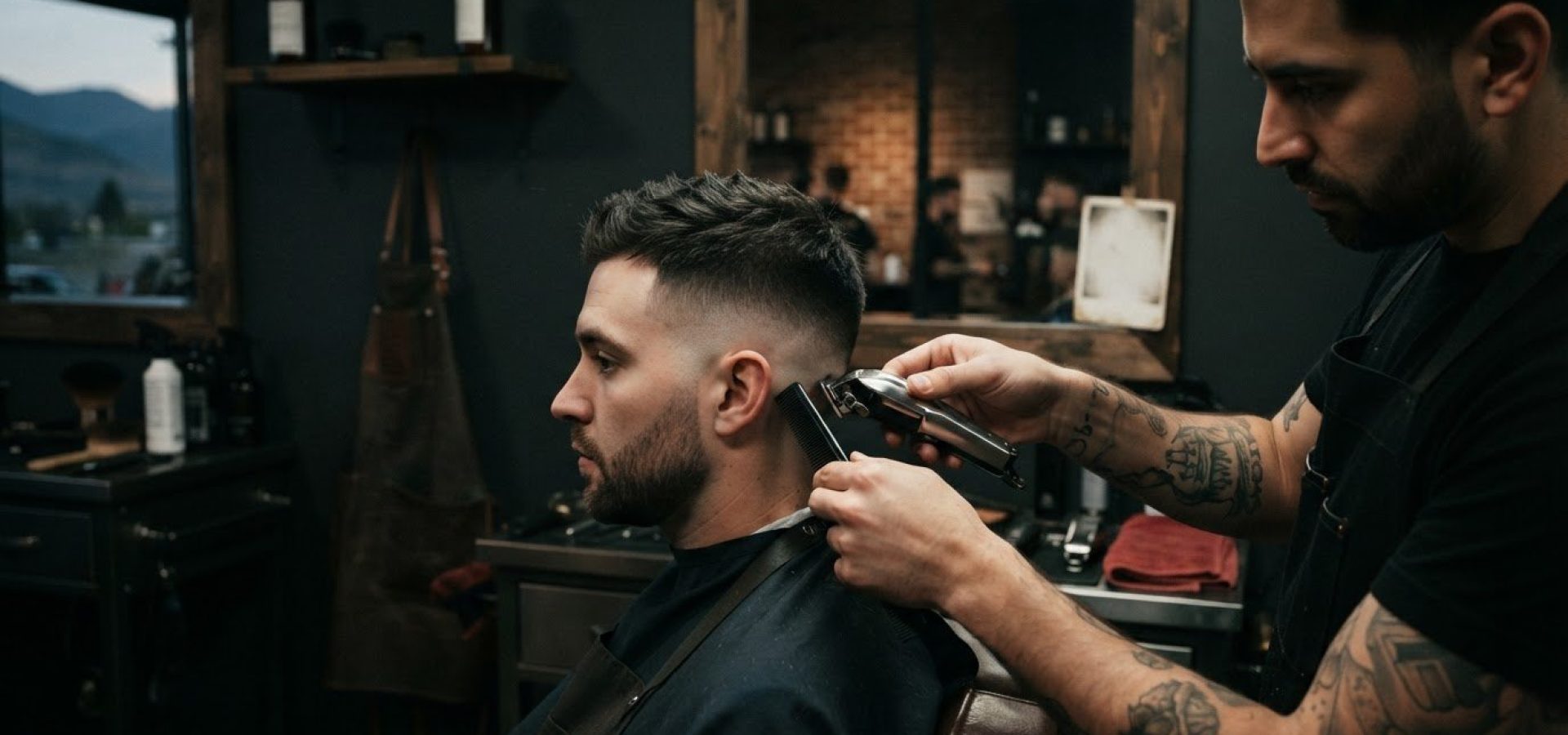
What if “skin fade” still leaves room for two different haircuts? If you’re wondering how to ask a barber for a skin fade, describe more than the name of the cut. A low, mid, or high fade changes where the shortest section begins, and a few clear details can help you and your barber picture the same result.
It’s normal to feel unsure about the terms, especially if you don’t get this cut often. You don’t need to speak like a barber or arrive with every detail figured out. Start with fade height, how close you want the hair cut at the base, the blend, and what you want to keep on top.
This guide explains those choices in plain language and gives you a short script to use in the chair. You’ll also learn how to confirm the plan before the clippers start and how to speak up if a detail is unclear. A focused conversation makes it easier to agree on the shape you want.
Key Takeaways
- Use “skin fade” as your starting point, then describe how high you want the fade to sit and how close you want the base cut.
- Knowing how to ask a barber for a skin fade means explaining the sides and back, plus the length and style you want on top.
- Be specific about your hairline and neckline so the finished shape suits your preference.
- Bring a reference photo with a similar hair type and head shape, then confirm the details before the cut begins.
- Straight 8 Barbers offers zero or skin fades at its locations in Kamloops and Vernon, British Columbia.
What to say when asking for a skin fade
Start with a straightforward request: “I’d like a skin fade, please.” That gives your barber a clear starting point, but it doesn’t describe the whole cut. If you’re learning how to ask a barber for a skin fade, remember that “skin” describes how close the hair gets at the base. You’ll also want to explain where the fade should sit, how it should blend, and what you want to keep on top.
A skin fade graduates the hair on the sides and back from a close or bare-skin finish into longer hair, with the height and blend shaped to your preference. Skin exposure and fade height are separate choices. Skin exposure describes how close the shortest area is, while fade height describes where that short area rises on your head.
What does “skin fade” tell your barber?
“Skin” tells your barber you want the hair very close at the bottom, sometimes down to bare skin. “Zero fade” is also used to describe a close finish, but the terms can be used differently. Say how close you want the base cut rather than relying on the label alone. A fade can be low, mid, or high and still reach skin at its base.
Think of the name as a starting point, not a complete haircut description. One person may want a low, soft blend with more coverage at the temples; another may prefer a high fade with sharper contrast. Explaining the shape you have in mind helps your barber understand which version you mean.
The four details that make a request clearer
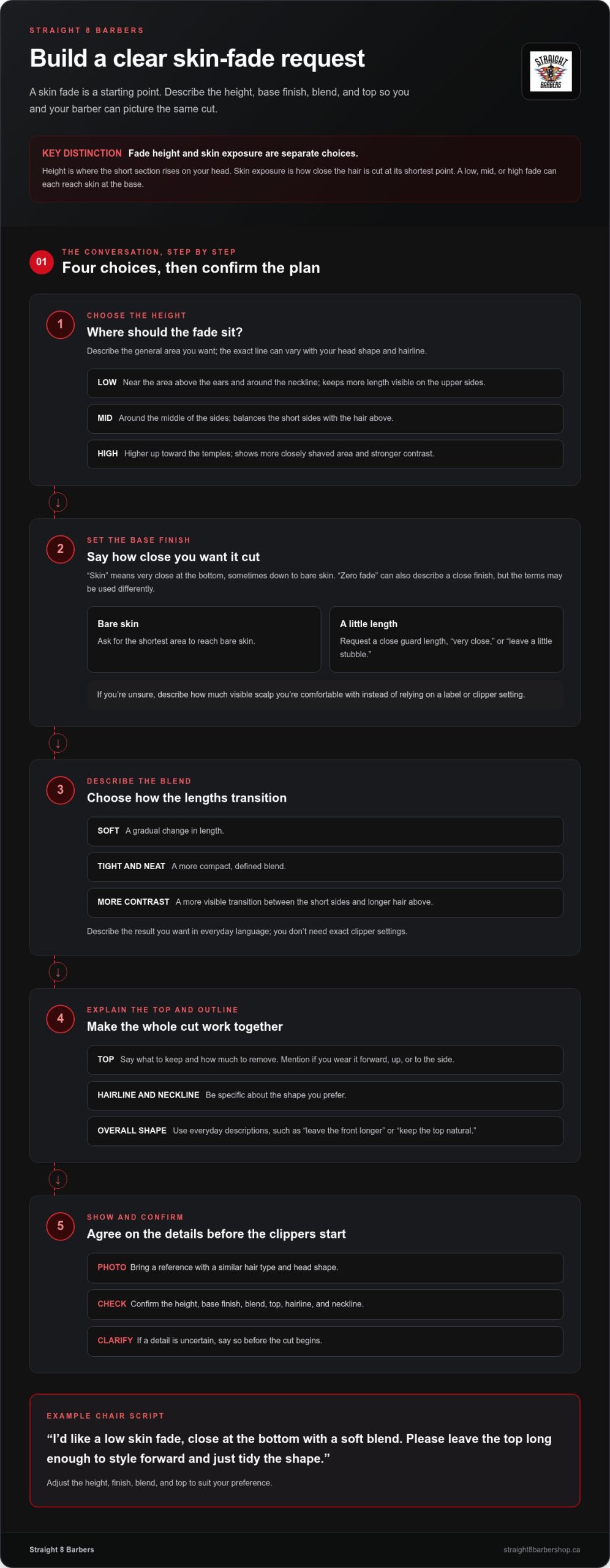
Share these preferences in everyday language. You don’t need technical terms or exact clipper settings.
- Height: Say whether you want the fade low near the neckline and ears, mid on the sides, or high toward the temples.
- Skin exposure: Explain whether you want bare skin at the bottom or a close guard length instead. If you’re unsure, describe how much visible scalp you’re comfortable with.
- Blend: Ask for a soft transition, a tight and neat blend, or more contrast between the short sides and longer hair above.
- Top: Tell your barber what to keep and how much you want removed. Mention whether you wear it forward, up, or to the side to help describe the length and shape you want.
Put the details together in one sentence: “I’d like a low skin fade, close at the bottom with a soft blend. Please leave the top long enough to style forward and just tidy the shape.” Change the height, finish, blend, and top to suit you. If you’re uncertain about a detail, say so before the cut begins. A quick clarification gives you and your barber a chance to agree on the plan.
Choose the fade height, skin finish, and blend you want
Once you’ve named the cut, decide where you want the fade to rise and how close it should go at the base. These choices work independently. Fade height sets how far up the sides the short section reaches; skin exposure sets how close the hair is cut at its shortest point. A low fade can finish at bare skin, just as a high fade can. The placement affects how much of the sides and temples look closely shaved.
Low, mid, or high: where should the fade sit?
Use the comparison below to picture the placement. The exact line can vary with your head shape and hairline, so describe the general area you want rather than expecting a precise boundary.
| Fade height | Where it begins | Overall impression |
|---|---|---|
| Low | Closer to the area above the ears and around the neckline | Keeps more length visible on the upper sides |
| Mid | Around the middle of the sides | Balances the short sides with the hair above |
| High | Higher up the sides, toward the temples | Shows more closely shaved area and creates stronger contrast |
To choose a height, consider how much closely cut hair you want visible from the front and sides. A low fade leaves more of the upper sides untouched, making it a quieter change. A high fade brings the short section farther up and makes the contrast with the top more noticeable. Mid sits between those options. If you’re undecided, tell your barber which description sounds closest and agree on the placement before the cut starts.
How close should the shortest part be?
Decide what “skin” means to you. You can ask for bare skin at the base or request a little length for a less exposed finish. If you already know a guard length you like, mention it. If not, descriptions such as “very close” or “leave a little stubble” give your barber a useful starting point.
Describe the blend separately. A soft transition changes gradually in length. A tighter blend can look more compact and defined, while a more visible transition creates stronger contrast. You might say, “Keep the fade low, leave a touch of length at the base, and make the blend soft.” That’s more helpful than naming a clipper number you don’t have in mind.
Barbering terms and professional standards have a wider context: the National Association of Barber Boards of America was formed in 1926 to support industry standards, policies, and licensure. For your haircut, clear preferences are the practical priority. If you’re in British Columbia, you can book a fade with Straight 8 Barbers or walk in at a shop in Kamloops or Vernon.
Describe the top, hairline, and overall shape
A skin fade describes the sides and back, not the whole haircut. The top can be left long, shortened, textured, or shaped to suit how you wear it. When you explain how to ask a barber for a skin fade, include these details so the sides and top work together as one cut.
Use everyday descriptions rather than relying on a trend name. A style label can mean different things to different people, while “leave the front longer” or “keep the top natural” gives your barber a specific direction. Think about the shape you want from the front, side, and back, and mention which detail matters most.
How to explain the length and style on top
Give a practical estimate of how much length you want to keep. You could ask your barber to take off about a finger’s width, remove only the ends, or leave the top mostly as it is. If you don’t know an exact amount, explain what you want to be able to do with your hair after the cut.
Describe how you style it on an ordinary day. Mention whether you push it forward, sweep it to the side, wear it up, or let it fall naturally. You can ask for a scissor cut, texture for movement, or the same shape with a tidy-up. For example: “Please take a little off the top with scissors, keep some texture, and leave enough length to sweep it to the side.” That explains both the finish and how you’ll wear it.
What to say about the hairline and neckline
Don’t assume the outline is included in your fade request. Say whether you prefer a natural hairline or a sharper finish at the temples and forehead. At the back, you can ask to keep the neckline natural or have it cleaned up. These choices affect the overall shape, especially when the sides are cut very close.
Point out details your barber might not know yet. A cowlick, uneven growth, a spot that sticks out, or an area you’d rather not draw attention to can affect how the cut sits. You don’t have to explain why; simply show or mention the area.
If you’re considering a sharper outline or a noticeable change to the hairline, ask to see where it would sit before the barber starts. You could say, “I’d like the temples cleaned up, but keep my natural front line,” or “Can you show me the neckline shape before you take it higher?” That gives you a chance to agree on the boundary. A clear request describes the whole shape, not just the fade.
Use a photo and confirm the request before the cut
A reference photo can help you show the shape you have in mind, especially if you’re unsure how to describe it. Use it as a guide for the conversation, not as a promise that your haircut will look identical. Hair texture, growth pattern, and head shape can all affect how a style sits.
When possible, choose a photo with hair and a head shape reasonably similar to yours. Point out the detail you want your barber to notice. One clear view is often more useful than a folder of pictures showing different cuts. A side view can show fade height, while a front or back view can make the top shape or outline easier to discuss.
How to use a reference photo well
Show the image and say what you like about it. Be specific: you might like how low the fade sits, how gradually it blends, or how the top is shaped. Then explain what you’d change to make the cut yours. For example, “I like this fade height, but I want more length on top and a natural neckline.” This makes clear which preferences the photo represents.
If the person in the photo has different hair texture or density, point that out too. Ask your barber to use the image as a general direction and adapt the shape to your hair. The goal is to understand each other before the clippers start, not to copy the image exactly.
A simple skin-fade script to personalize
A short routine can make it easier to explain how to ask a barber for a skin fade. Work through the details in order, then pause so your barber can confirm the plan:
- Show a photo. Point to the specific feature you want to use as a reference.
- Name the height. Say whether you’re thinking of a low, mid, or high fade.
- Explain the top. Describe how much length to keep and how you usually style it.
- Confirm the finish. Mention how close you want the shortest part and whether you prefer a natural or sharper outline.
Put it together like this: “I’d like a [low, mid, or high] skin fade with [top preference]. Please make the shortest part [bare skin or leave a little length], and keep the outline [natural or sharp]. Could you check that we’re picturing the same shape before you start?” Adjust the wording to fit your preferences. If something isn’t clear, talk it through before the cut begins. A calm check-in helps settle the details.
Ready to put your preferences into practice? Book a skin fade with Straight 8 Barbers, or walk in at a British Columbia shop.
Get a skin fade in British Columbia with a clear plan
A clear request comes down to four choices: fade height, how close the shortest part should be, what to leave on top, and how you want the outline shaped. You don’t need exact clipper numbers or barbering jargon. Plain descriptions give your barber a useful picture and leave room to talk through anything you’re unsure about.
- Fade height: Choose low, mid, or high to describe where the short section rises on the sides.
- Skin exposure: Say whether you want bare skin at the base or a little length left.
- Top: Describe how much length to keep and how you usually style it.
- Outline: Mention whether you prefer a natural or sharper finish at the temples and neckline.
This checklist puts the key points of how to ask a barber for a skin fade into practice. If you have a reference photo, bring it along and point out the detail you want to guide the cut. Let your preferences lead the conversation, with the photo as support.
What to bring to your appointment
Bring one clear reference image and decide what matters most in it, such as the fade height or the shape on top. Be ready to describe your usual styling routine and the length you want to keep. If you’re unsure about the blend or outline, say so. Use the consultation to clarify those choices and agree on a plan before the cut begins.
A simple reminder can help you feel prepared: “I like this height, but I want to keep more length on top. I’d prefer a natural neckline.” Adjust the wording to fit your hair and the look you want. You don’t need every answer ready before you sit down. Share the details that matter and speak up if something doesn’t match your picture.
Where to get a skin fade with Straight 8 Barbers
Straight 8 Barbers offers zero or skin fades at its British Columbia shops in Kamloops and Vernon. Online bookings and walk-ins are accepted. The shops include Kamloops locations on Hillside Drive, Oriole Road, and Tranquille Road at North Hills Mall, as well as a Vernon shop. Whether you’re looking up fade terminology in Kamloops, Kelowna, Vernon, Lake Country, Salmon Arm, Merritt, Sicamous, Armstrong, Surrey, Penticton, Revelstoke, or Abbotsford, the same consultation checklist can help you explain the cut you want. For more about a visit, read the what to expect at a men’s haircut in Kamloops guide.
Take your four choices into the chair and use the consultation to settle any final details before the clippers start. You can book a skin fade or walk in at Straight 8 Barbers.
Make your next haircut conversation count
A barber consultation is a conversation, not a test of how many technical terms you know. Arrive with a clear preference, ask a question, or adjust your idea as you talk it through. Knowing how to ask a barber for a skin fade means being able to describe what matters to you and confirm that you’ve been understood.
Speak up before the cut begins. If you’re unsure how a detail will look, ask your barber to explain the shape or talk through the options. That pause can help you feel settled before the first clipper pass. If you don’t know exactly what you want yet, start with what you do know and work through the rest together.
When you’re ready for your next cut, book a skin fade or walk in at Straight 8 Barbers. Bring your preferences and leave with a plan you’ve discussed together.
Frequently Asked Questions
Is a skin fade the same as a zero fade?
They can refer to a similarly close finish, but the terms aren’t always used in exactly the same way. If you want bare skin at the base, say that directly rather than relying on “zero” alone. If you’d rather keep a faint shadow of hair, explain that instead. This is especially useful if you’ve heard the two terms used for different-looking cuts.
Can I ask for a skin fade if my hair is curly or textured?
Yes. Curly or textured hair can be paired with a skin fade. Tell your barber how your hair sits when it’s dry and how you usually wear it, since curl pattern and shrinkage affect the overall shape. For example, mention if you want the sides close but prefer to keep volume or natural texture on top. A photo of your hair as you usual