


The sharpest-looking fade isn’t always the easiest one to live with. The skin fade vs taper fade choice can sound like a small distinction, but the shortest point makes a clear difference: one blends down to bare skin, while the other usually leaves a little length at the edges. If the names have blurred together, it’s fair to wonder how much skin will show.
The right choice comes down to where you want the blend to begin, how visible you want the scalp, and how you’d like the cut to grow out. A taper usually gives a softer finish; a skin fade creates more contrast and may call for more frequent refreshing if you want it to stay crisp. Neither is automatically better. Consider the haircut you’re pairing it with and the finish you feel comfortable wearing.
This guide explains where each fade sits, how it tends to grow out, and what to say or show your barber so you can describe the result you want. Straight 8 Barbers offers fade and haircut services in Kamloops and Vernon, British Columbia. A clear conversation helps shape the blend to suit your cut and preferences.
Key Takeaways
- In the skin fade vs taper fade choice, the key difference is how close the shortest point gets: a skin fade reaches bare skin, while a taper usually leaves some length.
- Fade placement and visible skin affect the cut’s contrast and how it frames your overall haircut.
- Choose based on the finish you prefer and the haircut you’re pairing it with, not face shape alone.
- At the barber chair, name the fade, describe its height and finish, and say whether you want bare skin or some length left.
- A reference photo can help you show the result you have in mind and make the conversation clearer.
Skin fade vs. taper fade: what is the difference?
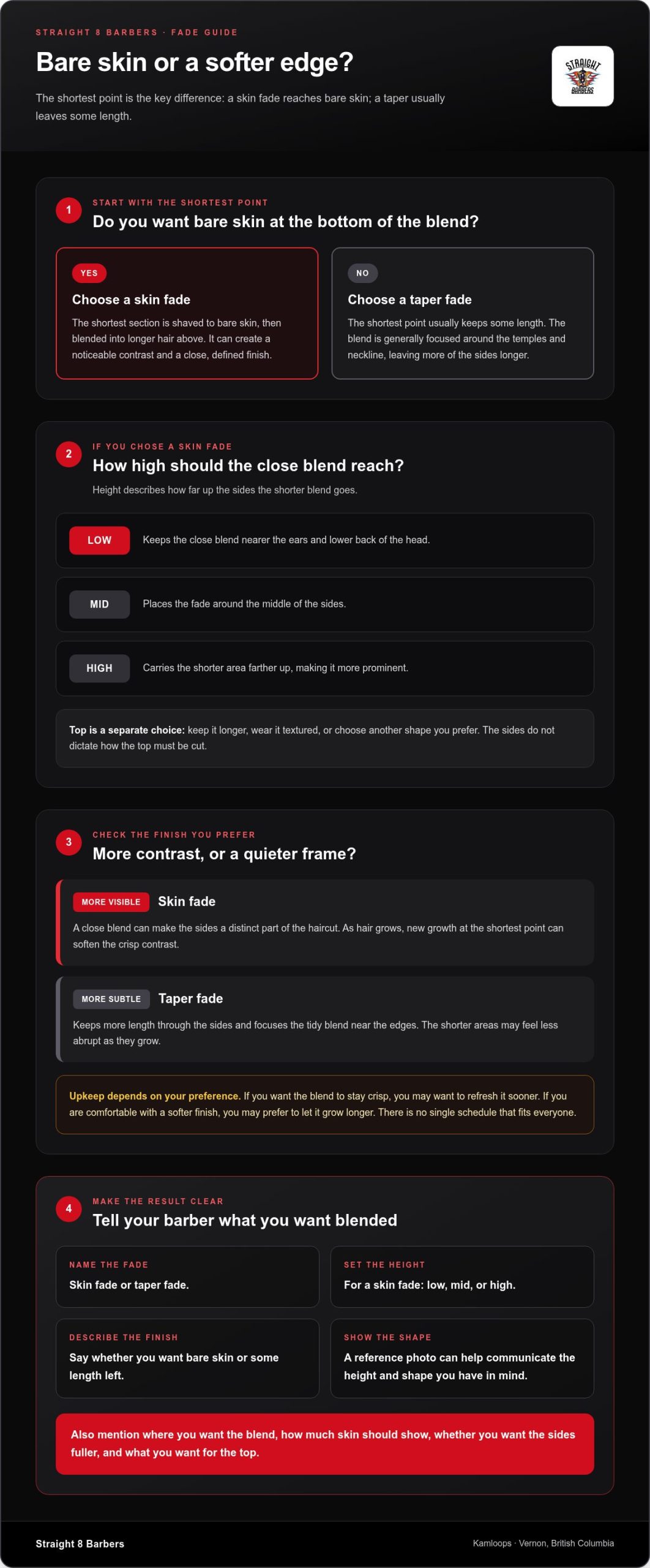
Both styles blend hair shorter, but they differ in how much of the head is blended and how short the blend gets. A skin fade takes the hair down to bare skin at its shortest point, then blends into longer hair above. A taper fade usually concentrates the change in length around the temples and neckline, leaving more of the sides longer.
That difference shapes the overall cut. A skin fade can create a noticeable contrast between the sides and the hair above. A taper keeps the transition closer to the edges, so the haircut often looks more understated. When comparing a skin fade vs taper fade, consider how much of the sides you want blended and whether you want bare skin at the bottom.
Where does a skin fade start and finish?
The fade’s height describes how far up the sides the shorter blend reaches. A low skin fade stays closer to the ears and lower back of the head. A mid fade sits around the middle of the sides, while a high fade carries the shorter area farther up. At the bottom, the shortest section is shaved to bare skin and blended into longer hair above.
The top is a separate part of the haircut. You can keep it longer, wear it textured, or choose another shape that suits your preference. The sides don’t dictate how the top must be cut, so tell your barber about both parts of the style.
What makes a taper fade different?
A taper fade is usually concentrated around the temples and neckline rather than blending a large area of the sides. Hair gets shorter toward those edges, but the shortest point generally retains some length instead of reaching bare skin. This leaves more of the sides looking full and can create a softer transition from the top.
Think of a taper as a tidy finish around specific edges, while a skin fade makes the blend a more prominent part of the haircut. The exact result depends on how high the taper sits and how much length stays at the sides.
Barber terminology can vary, and a name alone may not communicate the exact finish you have in mind. A photo can help show the height and shape you like. Also tell your barber where you want the blend, how much skin should show, and whether you want the sides to stay fuller. At Straight 8 Barbers, a clear conversation helps guide the blend for your haircut.
How skin fades and taper fades change the overall look
The difference shows in how much of the sides are shortened and how clearly the blend stands out. A skin fade can create a noticeable transition from bare skin to longer hair. A taper keeps the shorter blend focused near the temples and neckline, leaving more length through the sides. The fade’s height and the blending technique also shape the final result.
| Style | Placement | Finish | Overall impression | Upkeep considerations |
|---|---|---|---|---|
| Skin fade | Can sit low, mid-height, or high on the sides and back | May blend down to bare skin | More visible contrast and a defined, close finish | Regrowth can soften the crisp edge and make the blend look less sharp |
| Taper fade | Usually focused around the temples and neckline | Leaves some length at the shortest point | More restrained, with more of the sides staying longer | The shorter areas may feel less abrupt as they grow |
Which fade looks sharper or more subtle?
A skin fade suits someone who wants the blend to be easy to see, especially when the sides are cut close and the fade sits higher. A taper is a quieter choice if you’d rather keep more hair at the sides and show less skin. Neither look is automatically more flattering or appropriate. The full haircut, fade height, hair length, and the barber’s technique all affect how it comes together.
For example, a low skin fade keeps the close contrast nearer the ears, while a higher placement makes the shorter area more prominent. A taper can tidy the edges without changing as much of the side profile. If you’re deciding between them, think about whether you want the sides to be a defining feature of the cut or a more subtle frame for the top.
How does each fade grow out?
As hair grows, new growth becomes visible in the shortest part of a skin fade. That can soften the clean, close contrast that stands out just after a cut. A taper often changes more gradually because it starts with some length around the edges, though the outline will still grow out over time.
There’s no single upkeep schedule that fits everyone. Hair growth and personal preference differ. If you like the blend looking crisp, you may want to refresh it sooner; if you’re comfortable with a softer finish, you may prefer to let it grow longer.
For a fade or haircut in Kamloops or Vernon, Straight 8 Barbers’ haircut services give you the opportunity to describe the finish you want and shape the blend with your barber.
Which fade suits your haircut, hairline, and personal style?
Choose by the amount of contrast you want, where you prefer the blend to sit, and how much skin you’re comfortable showing. Your hairline and temples help shape how the cut frames your face, but face shape alone shouldn’t decide it. The top length, side profile, and overall haircut matter just as much.
As you weigh the skin fade vs taper fade, think about the result you want to see in the mirror. A close fade makes the sides stand out as a distinct part of the cut. A more focused blend keeps the edges tidy while leaving the rest of the sides fuller.
When might a skin fade be the better fit?
A skin fade may suit you if you like a close finish and clear contrast on the sides. Its height changes how much of the head has that closely cut appearance: a lower placement keeps it near the bottom, while a higher one carries the close blend farther up. Tell your barber whether you want bare skin visible and how high you’d like the fade to reach.
When might a taper fade be the better fit?
A taper may work well if you want neat edges around the temples and neckline but prefer to keep more length on the sides. Because the blend stays focused, it can preserve a softer overall shape. Talk through the top length and side profile together so the edges and the rest of the haircut feel balanced.
A reference photo can make those preferences easier to explain. Choose one that resembles the finish you want, then point out the details that matter: the blend’s height, the amount of visible skin, and how full you want the sides to look. Photos are a starting point, not a guarantee of an identical result, since your hairline, hair texture, and current length are part of the cut.
If you’re planning a visit, this guide to men’s haircuts in Kamloops explains more about what to expect at the chair. A clear description and a useful reference help your barber shape a fade that fits your haircut and personal preference.
What should you tell your barber about a skin or taper fade?
You don’t need to know every barbering term to explain the cut you want. Share the result in a few clear steps: name the fade, describe its height, explain how close you want the shortest area, and show a reference photo. Then talk about how you’d like the sides to connect to the top and neckline.
For example, you might say, “I’d like a low skin fade, but keep the contrast soft and leave the top longer.” Or, “I’m after a taper around the temples and neckline, with more length left on the sides.” These details give your barber a useful starting point. If you’re unsure about a term, describe what you like and discuss the details together.
How do you describe fade height and finish?
Use “low,” “mid,” or “high” if you know where you want the blend to sit, or point to the matching area in your reference photo. Be direct about the shortest point: should it reach bare skin, or should some length remain? You can also describe the contrast as soft or pronounced. Height, starting length, and blending technique all affect the finish, so a photo helps give those words context.
Discuss the shape as a whole, too. Explain whether you want the sides to blend gradually into the top, stay more separate, or follow a particular neckline shape. If you’re not certain which wording fits, describe what you like and let your barber help translate it into a cut.
What should you bring to the barber chair?
One or two reference images can help show the side and back clearly. Choose photos that resemble the overall shape you want, not just a close-up of the fade. It’s also useful to mention what worked or didn’t work with your last cut. Perhaps the sides felt too bare, the fade sat higher than you expected, or the finish grew out differently than you liked.
Your day-to-day routine matters as well. Let your barber know whether you prefer a crisp finish or a softer grow-out, and how much styling and upkeep you’re comfortable with. That context helps guide the fade and the top length together.
A good consultation is a conversation, not a test of terminology. At Straight 8 Barbers, share your preferences and reference, then book a fade or haircut in Kamloops or Vernon.
Choose your fade and get a clean, comfortable barber cut
The choice is straightforward: a skin fade gives you a closer, more visible blend, while a taper keeps the shorter work focused for a softer finish. Neither is the right choice for everyone. Think about how much skin you want showing, where you want the fade to begin, and how the sides should connect with the top and neckline.
A quick checklist before you choose
- Pick your placement: Decide whether you want the fade low, around the middle, or higher on the sides.